Is It Safe to Remove a Large Tree Yourself, or Should You Always Hire a Professional?
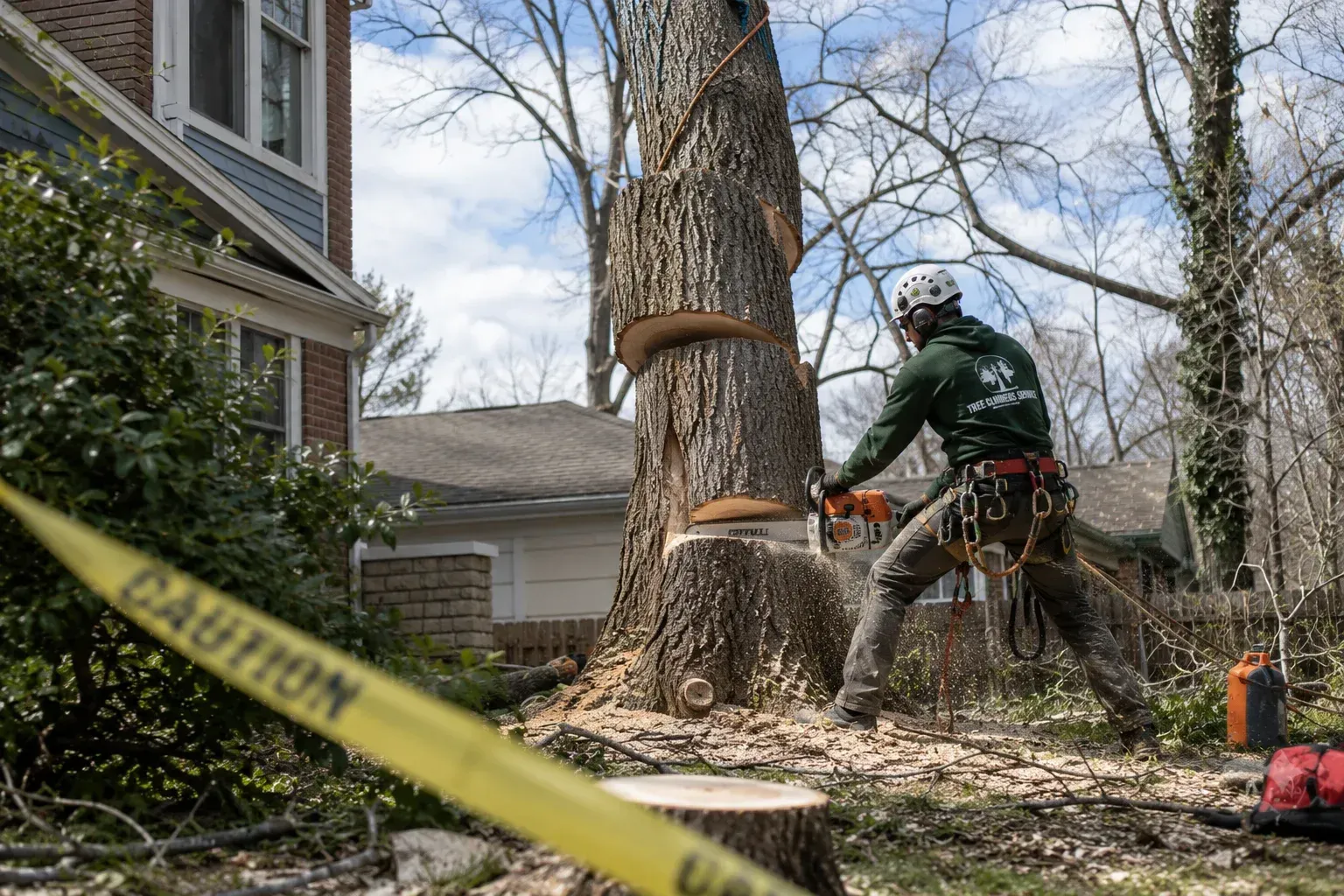
Table of Contents
- Introduction
- What Counts as a "Large" Tree?
- The Real Risks of Removing a Large Tree Yourself
- The Equipment Gap Between a Homeowner and a Crew
- When DIY Removal Is Reasonable
- When You Should Always Call a Professional
- What a Professional Removal Actually Looks Like
- Weighing Cost Against Risk
- Conclusion
- Staring at a Tree You're Not Sure You Can Handle?
- Frequently Asked Questions
Key Takeaways
- Removing a large tree yourself is generally not safe. Once a tree is taller than about 20 feet, near a structure, or close to power lines, the risk rises sharply.
- The most common DIY injuries come from chainsaws, falls from ladders, and trees or limbs that fall in an unexpected direction.
- Large removals depend on rigging, controlled dismantling, and lift equipment that most homeowners have no reason to own or practice with.
- Small, open-ground trees under about 15 to 20 feet can be a reasonable DIY project for someone comfortable with a chainsaw and basic safety gear.
- Anything involving power lines, leaning trunks, storm damage, or visible decay belongs with trained crews, no exceptions worth making.
Introduction
No, it is generally not safe to remove a large tree yourself. Once a tree is taller than about 20 feet, stands near a house, fence, or power line, or shows any lean or decay, the job calls for professional tree removal rather than a weekend attempt with a chainsaw and a ladder.
That answer disappoints a lot of capable homeowners, and it deserves an honest explanation rather than a scare tactic. Plenty of people in Grand Junction own chainsaws, run them well, and handle their own firewood every fall. The problem is not the saw. It is physics. A large tree can weigh several tons, it stores tension in ways that are hard to read from the ground, and it only has to fall wrong once.
This article walks through where the real dangers sit, what separates a small job from a large one, and how to decide which side of that line your tree is on.
What Counts as a "Large" Tree?
There is no official cutoff, but a practical one works fine: if you cannot fell the tree in one piece with plenty of clear ground on every side, treat it as large. In most Grand Junction neighborhoods, lots are tight enough that anything over 20 feet fails that test.
Height is only part of it. A 25-foot Siberian elm wedged between your garage and the neighbor's fence is a harder, more dangerous job than a 40-foot tree standing alone in a field. Trunk diameter matters too. A trunk over 10 to 12 inches across is heavy enough that a bad cut can pinch the saw bar or split the trunk vertically while you are standing next to it.
Around the Grand Valley, the trees that most often end up in this category are mature cottonwoods along ditches and canals, old Siberian elms, and big globe willows. All three grow fast, get heavy, and hide decay well.
The Real Risks of Removing a Large Tree Yourself
Chainsaw Injuries
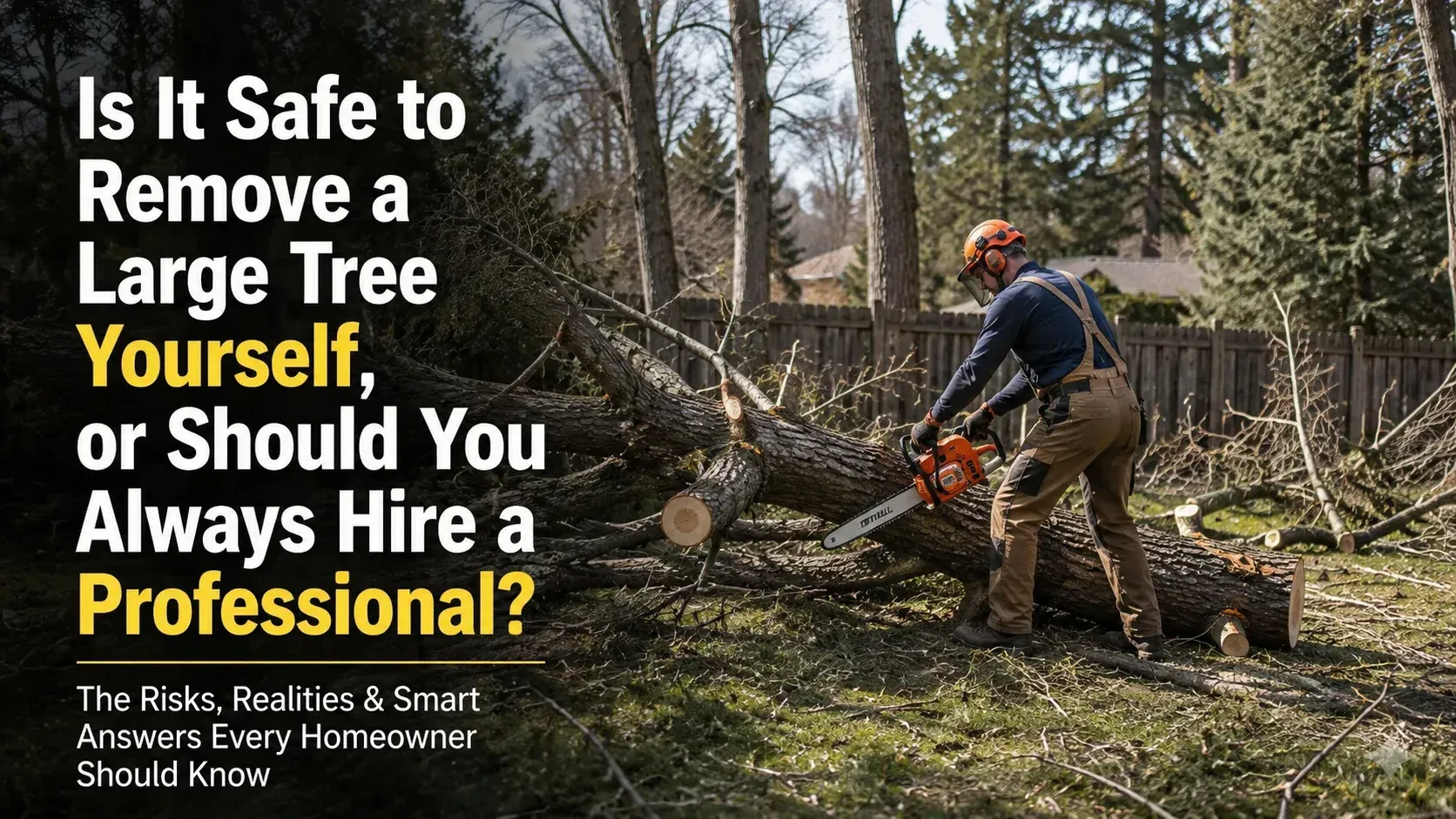
The U.S. Consumer Product Safety Commission has estimated that emergency rooms treat tens of thousands of chainsaw injuries every year, and a large share involve people cutting above shoulder height or working from ladders. A saw that kicks back at ground level is frightening. The same kickback 15 feet up a ladder is how people end up in the hospital, or worse.
The Tree Falls the Wrong Way
A properly cut tree falls where the notch points it. In practice, wind, hidden rot, uneven weight in the canopy, and an imperfect hinge cut all pull against that plan. Professionals misjudge falls occasionally even with ropes and wedges backing them up. A first-timer has no backup at all, and in town the "wrong way" usually means a roof, a car, or a neighbor's property.
Working at Height
Most serious DIY tree accidents are not saw injuries. They are falls. Ladders were never designed to be a cutting platform, because the limb you are cutting can swing back and knock the ladder out from under you. Climbing the tree itself without a rated harness, rope, and the training to use them is more dangerous still.
Power Lines
Any tree within reach of a service line or overhead conductor is off the table for DIY work, full stop. Wood conducts electricity, especially green wood, and contact does not require touching the wire directly. There are specific clearances and utility procedures involved in work near power lines, and homeowners are not authorized to work inside them.
Hidden Decay and Stored Tension
Grand Junction's dry climate makes some species brittle, and internal rot is common in older cottonwoods that look solid from outside. A decayed trunk can barber-chair, splitting vertically and snapping backward mid-cut. Storm-damaged and leaning trees are loaded like springs, and cutting into that tension releases it instantly in whatever direction it wants.
The Equipment Gap Between a Homeowner and a Crew
Large trees in yards are rarely felled whole. They are taken apart from the top down, piece by piece, with each section roped, lowered, and controlled so nothing free-falls onto whatever sits below. That process depends on gear most homeowners have never handled: rigging ropes rated for shock loads, friction devices, climbing saddles, and often a lift.
Crews working in this area also bring machines matched to awkward access, such as tracked spider lifts that fit through gates and stump grinders that finish the job below grade. The specific tools and techniques vary by job, but the point is the same: the equipment exists because gravity does not negotiate.
Renting the gear does not close the gap. Rigging a two-ton section over a roof is a skill built over years of supervised work, not something a rental counter can hand over with the keys.
When DIY Removal Is Reasonable
Honesty cuts both ways. Not every tree needs a crew.
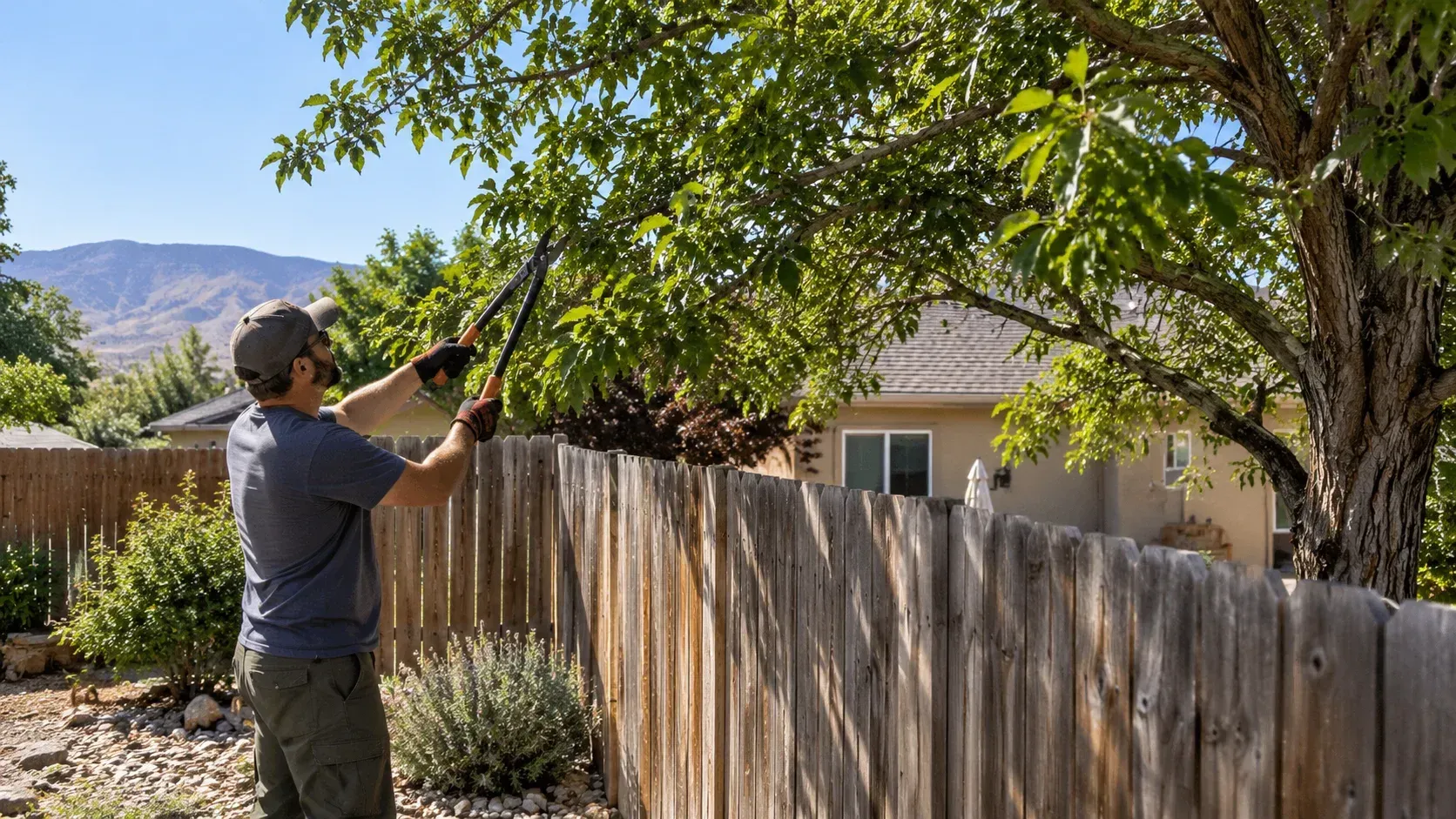
A small tree, roughly 15 to 20 feet or less, with open ground on all sides at least one and a half times its height, is a reasonable project for a homeowner who is comfortable with a chainsaw. So is a dead ornamental in the middle of a lawn or clearing your own downed limbs after a windstorm, provided nothing is under tension.
If you take on a job like that, wear chaps, eye and ear protection, and a helmet. Keep both feet on the ground. Plan two escape paths at 45 degrees behind the fall line. And if anything about the tree makes you hesitate, that hesitation is information.
When You Should Always Call a Professional
Some situations remove the judgment call entirely:
- The tree is within falling distance of a house, garage, fence, or street.
- Any part of it is near power or service lines.
- The trunk leans, or the tree shifted after a storm.
- You can see cavities, fungus, dead bark, or carpenter ant activity.
- The tree is tangled in another tree or resting on a structure.
- The job requires cutting above shoulder height or leaving the ground.
Storm-damaged trees deserve special mention. A half-fallen tree hung up in its neighbor is one of the most dangerous objects on any property, which is why emergency tree services exist as a distinct, around-the-clock category of work.
What a Professional Removal Actually Looks Like
Understanding the process helps explain the price. A crew starts with an assessment: species, lean, decay, targets below, and access for equipment. They plan the dismantling order before anyone starts a saw.
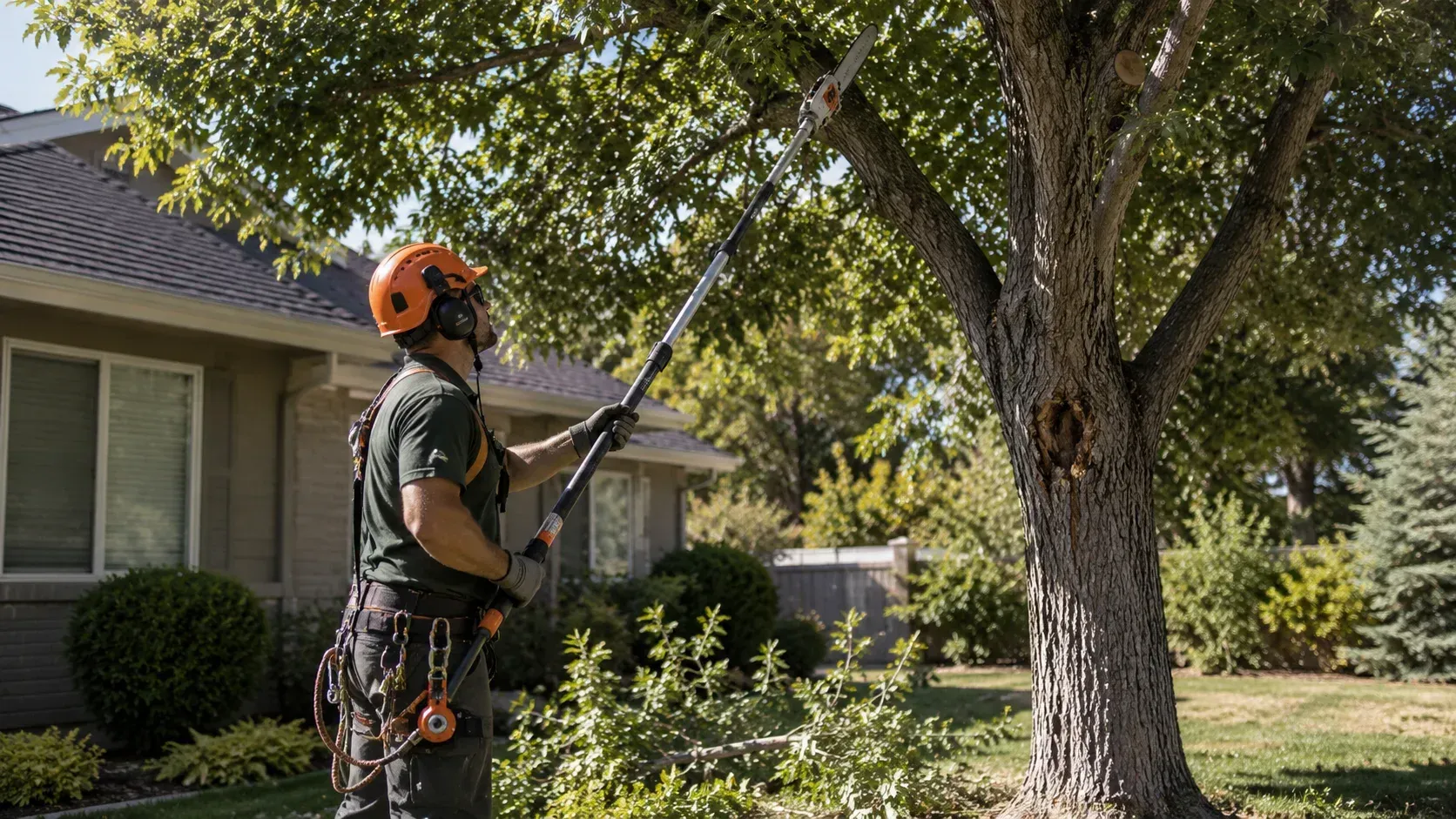
The climber or lift operator then works from the top down, rigging limbs and trunk sections so each piece is lowered under control. Ground crew manage ropes, feed brush into a chipper, and buck the trunk. Afterward the wood is hauled or left as firewood by agreement, and the stump is ground out if that was part of the scope.
Two things worth asking any company about: proof of liability insurance and workers' compensation coverage. Both protect you, because an uninsured worker injured on your property can become your financial problem.
Weighing Cost Against Risk
Professional removal of a large tree is not cheap, and pretending otherwise would be dishonest. Prices vary widely with size, condition, and access, which is why estimates are done in person rather than over the phone.
The comparison that matters is not the quote against zero. It is the quote against the realistic downside of a DIY attempt: an emergency room visit, a damaged roof, a severed service line, or a claim your homeowner's insurance may deny because the damage came from unpermitted work you performed yourself. Measured that way, the math on large trees rarely favors doing it alone.
Conclusion
Small tree in open ground, feet on the dirt, no wires anywhere near: a careful homeowner can handle that. Large trees, tight quarters, height, lean, decay, or electricity: that is professional territory, and the dividing line is about physics and consequences, not ability or pride. If you are unsure which category your tree falls into, that uncertainty itself is the answer, because the people who get hurt are almost never the ones who knew the job was over their head. Get eyes on it before anyone starts a saw.
Staring at a Tree You're Not Sure You Can Handle?
If there is a tree on your Grand Junction property and you are torn between renting a saw and picking up the phone, an on-site assessment settles the question quickly.
Contact us or call (970) 589-2268 and describe what you are looking at. You will get a straight answer about what the job involves, with no pressure to book anything, so you can make the call with full information instead of guesswork.
Frequently Asked Questions
Is it legal to remove a large tree yourself in Grand Junction?
On private property, homeowners can usually remove their own trees, though some HOAs and city rules apply to street trees and trees in easements. Legal and safe are separate questions. Check local requirements before starting any removal.
How tall of a tree can I safely remove myself?
A common practical limit is about 15 to 20 feet, and only when the tree has clear ground on every side, no lean, no decay, and no wires nearby. Beyond that, controlled dismantling and rigging are usually required.
What is the most dangerous part of DIY tree removal?
Working at height causes the most serious injuries. Cutting from a ladder or climbing without proper gear leads to falls, and chainsaw kickback above ground level compounds the danger.
Can I remove a tree near power lines if I'm careful?
No. Trees near energized lines require utility coordination and crews trained for line-clearance work. Green wood conducts electricity, and minimum approach distances exist because contact does not require touching the wire.
What should I do with a tree that was damaged in a storm?
Keep people and pets away from it and do not cut anything under tension. Partially fallen or hung-up trees store enormous force and are among the most hazardous removals, so have them assessed before any cutting happens.
Related Posts