Can Mule Deer and Elk Actually Damage Tree Bark in Redlands and Clifton Yards?
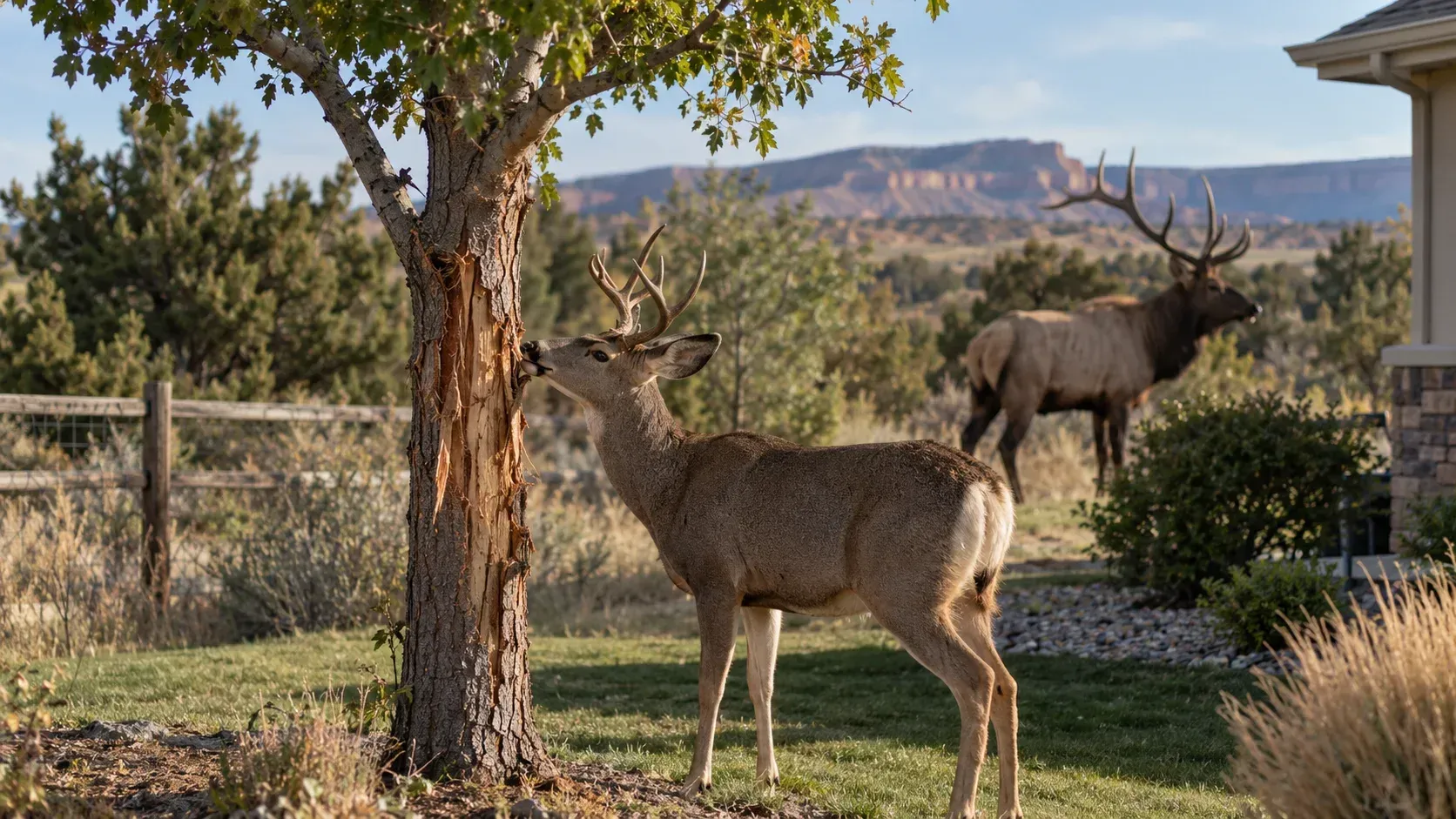
Table of Contents
- Can Deer and Elk Really Damage Tree Bark?
- How Deer and Elk Damage Bark Differently
- How to Tell Deer or Elk Damage From Other Causes
- When Bark Damage Actually Threatens a Tree
- Which Trees Are Most at Risk in Redlands and Clifton
- How to Protect Trees From Deer and Elk
- Conclusion
- Worried About Deer or Elk Damage to Your Trees in Grand Junction?
- Frequently Asked Questions
Key Takeaways
- Both mule deer and elk can damage tree bark, but they do it in different ways. Deer mostly rub bark off with their antlers, while elk both rub and strip bark by biting and pulling.
- The most serious risk is girdling, where bark is removed all the way around the trunk. A fully girdled tree usually cannot survive.
- Young and thin-barked trees are far more vulnerable than mature, thick-barked ones. Fruit trees, aspens, and newly planted shade trees are common targets.
- Fall rut season, roughly September through November, is when antler rubbing peaks in the Grand Valley.
- Physical barriers like trunk guards and fencing tend to work better than sprays or repellents, though the right choice depends on the tree and the pressure in your area.
Can Deer and Elk Really Damage Tree Bark?
Yes. Mule deer and elk can both damage tree bark, and in yards near open space in Redlands and Clifton it is a common problem, especially on young trees. Deer strip and scrape bark mainly by rubbing their antlers on trunks, while elk cause heavier damage through both antler rubbing and actively stripping bark with their teeth. Knowing which animal is at work, and how deep the wound goes, is the first step toward sensible tree care service that keeps damage from becoming permanent.
This matters because bark is not just a wrapper. The living tissue just beneath it, called the cambium, moves water and nutrients between the roots and the canopy. When that layer is torn away in a wide enough band, the tree loses its ability to feed itself in that section.
Redlands and Clifton both sit where suburban yards meet foothills, canals, and the Colorado River corridor. That edge habitat is exactly where deer and elk travel, browse, and shelter, which puts landscape trees squarely in their path.
How Deer and Elk Damage Bark Differently
The animal doing the damage changes what you see and how bad it gets. Telling them apart helps you respond correctly.
Deer: Antler Rubbing
Male mule deer rub their antlers on small trees and saplings mostly in the fall. They do this to remove the velvet from new antlers and to mark territory during the rut. The result is scraped, shredded bark on one side of a slender trunk, usually between knee and waist height.
Deer rubs tend to hit trees roughly 1 to 4 inches in diameter, because a flexible sapling gives good resistance. A single aggressive buck can ruin a young tree in one evening.
Elk: Rubbing and Stripping
Elk are much larger, and they cause two kinds of damage. Like deer, bulls rub antlers during the rut, but on bigger trees and with more force. Elk also strip bark by biting the trunk and pulling upward, especially in late winter and early spring when other food is scarce.
Elk bark stripping often leaves long vertical scrapes with visible tooth marks and frayed edges higher up the trunk than deer can reach. Because elk are heavy and strong, elk tree damage can involve broken limbs and bark loss over a much larger area than a deer rub.
How to Tell Deer or Elk Damage From Other Causes
Bark damage has several possible causes, and treating the wrong one wastes effort. Here is how wildlife damage usually differs from the alternatives.
| Cause | What it looks like | Typical location on trunk |
|---|---|---|
| Deer antler rub | Shredded, scraped bark on one side, vertical grain | Knee to waist height, small trees |
| Elk rub or strip | Long scrapes, tooth marks, frayed bark, larger area | Low to chest height or higher |
| Rodent or rabbit | Clean gnaw marks, small teeth grooves, often near ground | Base of trunk, under snow line |
| Sunscald | Cracked, sunken, discolored bark, no tearing | South or southwest side |
| Mechanical (mower, string trimmer) | Smooth gouges, consistent height | Very base of trunk |
Deer and elk damage generally shows torn, shredded fibers rather than clean cuts. Rodent damage leaves neat parallel grooves from small teeth. Sunscald, which is common on thin-barked trees in the high desert, produces cracking and discoloration without any tearing at all.
When Bark Damage Actually Threatens a Tree
Bark damage becomes life-threatening when it removes a complete ring of bark around the trunk, a condition called girdling. Partial damage on one side is often survivable, but a fully girdled tree usually declines and dies because nothing can carry nutrients past the wound.
The key measurement is how much of the trunk's circumference lost its bark. A rough guide many arborists use:
- Less than 25 percent of the circumference: The tree can often seal the wound over time and recover.
- 25 to 50 percent: Recovery is possible but slower, and the tree needs monitoring.
- 50 percent or more: Risk rises sharply, and the section above the wound may decline.
- Full girdling (100 percent): The tree is unlikely to survive, though it may leaf out for a season or two on stored energy before dying back.
Depth matters too. If only the outer bark is scraped but the cambium underneath is intact, the tree has a much better chance. If the damage goes deep into the wood, the affected area will not recover.
Do not try to "seal" wounds with paint or tar. Research from sources such as university extension programs has shown wound dressings do not help trees compartmentalize damage and can trap moisture. Clean, undressed wounds generally heal better.
Which Trees Are Most at Risk in Redlands and Clifton
Not every tree faces the same risk. Vulnerability comes down to bark thickness, trunk size, and species.
Young and newly planted trees are the top target because their thin, smooth bark tears easily and their slender trunks are ideal for antler rubbing. Thin-barked species stay vulnerable longer. In Grand Valley yards, the trees that tend to take the most damage include:
- Fruit trees (apple, peach, cherry): thin bark, popular browse, common in Redlands and Clifton yards.
- Aspens: smooth, thin bark that scars permanently and is prone to elk stripping.
- Young maples and lindens: frequently rubbed as saplings.
- Newly planted shade trees: vulnerable for their first several years until bark thickens.
Mature trees with thick, furrowed bark, such as older cottonwoods and established conifers, are far more resistant, though heavy elk activity can still break limbs and strip patches. If wildlife pressure is a known issue on your property, factoring it into plant choices and placement is a legitimate part of protecting trees in Redlands yards.
How to Protect Trees From Deer and Elk
The most reliable way to protect trees from deer and elk is a physical barrier, such as a trunk guard around individual trees or fencing around a group of them.
Repellents and scent deterrents can help in low-pressure areas but tend to be less dependable, since hungry animals often push through them.
Here are the main options, with honest trade-offs for each.
Trunk Guards and Wraps
Wrapping the lower trunk with a rigid plastic tree guard, hardware cloth, or corrugated tubing blocks antler rubbing and gnawing. This is usually the best value for individual young trees.
Trade-offs: Guards must be wide enough that the animal cannot rub above them, and they should be loosened or removed as the trunk grows so they do not constrict it. Check them each year.
Fencing
A fence around a tree or planting bed keeps animals away entirely. For deer, fencing generally needs to be tall, often 6 to 8 feet, because deer jump well. Elk require sturdier fencing still.
Trade-offs: Fencing is the most effective option but also the most expensive and visually intrusive. It suits orchards or high-value plantings more than a single yard tree.
Repellents
Scent and taste repellents can reduce browsing and rubbing in areas with light pressure. They need regular reapplication, especially after rain or snow.
Trade-offs: Effectiveness varies, and animals under food stress in late winter often ignore them. Treat repellents as a supporting measure, not a sole defense.
Timing Your Defenses
Because antler rubbing peaks during the fall rut, roughly September through November, installing trunk guards in late summer heads off the worst of it. Elk stripping is more of a late-winter concern, so barriers that stay on through the cold months matter where elk are present.
For guidance specific to Colorado wildlife, Colorado Parks and Wildlife publishes homeowner resources on living with deer and elk, and local university extension offices offer research-based advice on tree protection.
Conclusion
Mule deer and elk can both damage tree bark in Redlands and Clifton yards, and the risk is real for young, thin-barked, and newly planted trees near open space, canals, and the river corridor. Deer mostly rub with antlers in the fall, while elk both rub and strip bark into late winter, which means the threat spans more than one season. What decides a tree's fate is how much of the trunk lost its bark: partial, one-sided damage is often survivable, while full girdling usually is not. Physical barriers such as trunk guards and fencing tend to protect trees more reliably than repellents, and any guard needs yearly checking so it does not harm the tree it was meant to save. When damage is severe or hard to read, an in-person assessment beats guessing, because both keeping a doomed tree and removing a recoverable one are outcomes worth avoiding.
Worried About Deer or Elk Damage to Your Trees in Grand Junction?
If deer or elk have been rubbing or stripping the trees in your Redlands or Clifton yard and you are not sure how serious it is, a professional look can tell you whether the tree can recover or needs attention. Feel free to
reach out to our team or call (970) 589-2268 to talk through what you are seeing. You will get a straight, no-pressure answer about protecting your trees from deer and elk, so you can decide what makes sense for your property.
Frequently Asked Questions
Will a tree survive if deer stripped bark off part of the trunk?
Often yes, if less than about a quarter of the trunk's circumference is affected and the cambium beneath is intact. Trees seal partial wounds over time. Full girdling, where bark is removed all the way around, is usually fatal.
When do deer and elk damage trees the most?
Antler rubbing peaks during the fall rut, roughly September through November. Elk bark stripping is more common in late winter and early spring when other food is scarce, so the risk spans several seasons.
Should I put paint or sealant on a bark wound?
No. Research from university extension programs shows wound dressings do not help trees heal and can trap moisture and decay. Leaving the wound clean and undressed generally gives the tree a better chance to recover.
What is the best way to protect young trees from deer and elk?
Rigid trunk guards or hardware cloth around individual trunks are usually the most practical option. For groups of high-value trees, tall fencing works best. Check and loosen guards yearly so they do not constrict the growing trunk.
Do repellents actually keep deer and elk away from trees?
They can help in areas with light pressure but are less reliable than physical barriers. Repellents need regular reapplication and are often ignored by animals during hard winters, so they work best as a backup rather than a sole defense.
Related Posts