Can Leftover Tree Roots Damage a Sewer Line Years After the Tree Is Gone?
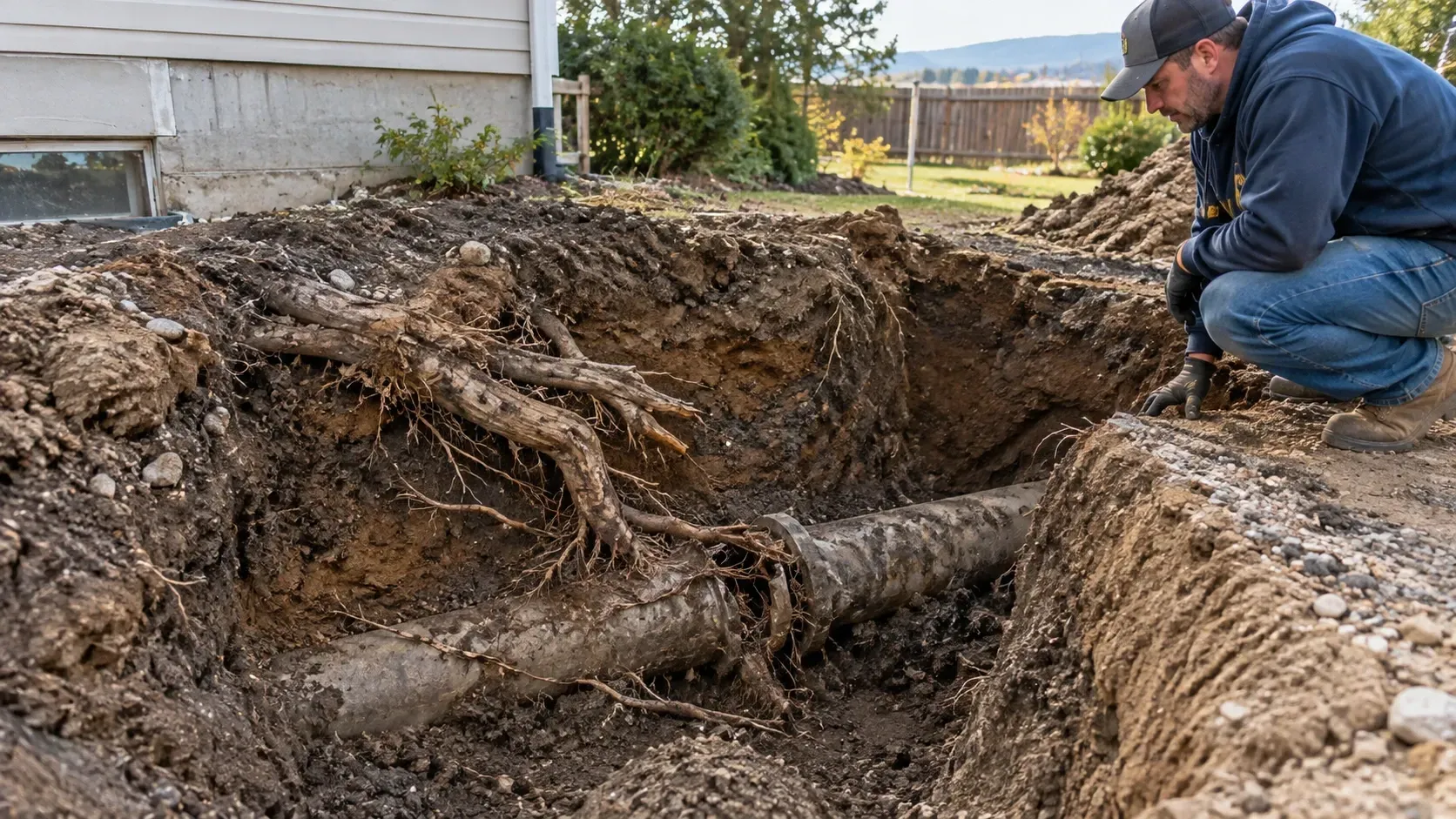
Table of Contents
- Can Leftover Tree Roots Still Harm a Sewer Line?
- How Roots Get Into Sewer Lines in the First Place
- What Happens to Roots After a Tree Is Removed
- Why Problems Can Appear Years Later
- Warning Signs of Root Trouble in a Sewer Line
- A Decision Framework for Suspected Root Problems
- A Realistic Grand Junction Scenario
- Common Misunderstandings About Leftover Roots
- What Typical Online Advice Overlooks
- Risks, Limitations, and Trade-Offs
- Conclusion
Key Takeaways
- Yes, leftover tree roots can affect a sewer line years after a tree is gone, either because roots already inside the pipe keep causing blockages or because decaying roots leave voids that let soil shift around the pipe.
- Roots do not damage a sound, sealed pipe on their own. They usually enter through existing cracks, loose joints, or deteriorated sections, and older clay, cast iron, and fiber pipe are the most vulnerable.
- Grinding a stump removes the stump, not the root system. Some species can also resprout from roots and stump tissue after removal.
- Slow drains, gurgling fixtures, and repeated backups are the most common signs, and a camera inspection by a licensed plumber is the reliable way to confirm what is in the line.a
- Planning root and sewer line locations before a tree comes out is easier than diagnosing a problem years afterward.
Can Leftover Tree Roots Still Harm a Sewer Line?
Yes. Leftover tree roots can contribute to sewer line problems for years after a tree is removed, mainly in two ways: roots that already grew into the pipe can keep causing blockages as they break apart, and old roots that decay underground can leave voids that let soil settle and shift around the line. The risk is real but not universal, and it depends heavily on the pipe material, its condition, and the tree species involved. Choosing the right stump removal approach, and understanding what stays in the ground afterward, helps set realistic expectations.
This matters because a sewer lateral, the pipe running from your house to the main line, is usually the property owner's responsibility, and a backup can mean expensive cleanup and repair. Many people assume the root issue ends once the tree and stump are gone.
This article explains how roots interact with sewer lines, why trouble can surface long after a tree is gone, and what to do if you suspect a problem.
How Roots Get Into Sewer Lines in the First Place
Tree roots grow toward moisture and nutrients, and a leaking joint or crack in a sewer pipe releases both. Roots do not typically break through a sound, tightly sealed pipe. They enter through small openings and then expand inside, where the warm, nutrient-rich wastewater supports rapid growth.
Why Pipes Attract Roots
Even a hairline leak in a sewer line creates a moist, nutrient-rich zone in the surrounding soil. Fine feeder roots grow toward it, and once a root tip finds an opening, it can thicken inside the pipe and form a dense mat that catches paper and solids.
Which Pipes Are Most Vulnerable
Pipe material makes a large difference. Older clay tile pipe has many joints that can loosen over time. Cast iron can corrode and crack, and fiber conduit sometimes sold as Orangeburg pipe can deform as it ages. Modern PVC pipe with tight joints is far more resistant, though not completely immune.
Which Trees Are Most Aggressive
Fast-growing, moisture-loving species tend to have wide, shallow root systems. In Grand Valley yards, cottonwoods, Siberian elms, silver maples, and willows are commonly associated with root conflicts around buried lines. Other trees are not harmless, but these species have a reputation for reaching far in search of water.
What Happens to Roots After a Tree Is Removed
The fate of the roots depends on what was removed, what stayed behind, and the species.
When a tree is cut down, the roots lose their main source of energy from the canopy. In most cases, the smaller roots die and begin to decompose over months to a few years, while larger structural roots take longer. Understanding what happens to roots after removal helps explain why the effects are not immediate and not uniform.
Roots Already Inside the Pipe
Roots that were already growing inside the sewer line do not vanish when the tree is cut. They typically die back, but a dead root mass can dry out, break loose, and drift downstream until it catches on a joint or bend and causes a blockage. That delayed blockage can show up weeks, months, or longer after the removal.
Decaying Roots and Underground Voids
As roots decompose, they leave channels and empty spaces in the soil. Soil above and around a sewer line can then settle or shift into those gaps. In a pipe that is already fragile, that movement can add stress to joints and sections that were previously holding.
Resprouting From Stumps and Roots
Some species can send up new shoots from a stump or surviving roots after the tree is cut. Cottonwoods, elms, and willows are commonly known for this, and a living root system near a sewer line can keep growing toward the same moisture source. There is useful background on whether a tree can regrow from a stump.
Why Problems Can Appear Years Later
A long delay between removal and a sewer problem is common, and the reasons are mostly mechanical. Large roots decompose slowly, so the voids they leave open gradually. Dead root fragments inside a pipe may sit in place until a surge of water or a cleaning attempt moves them. And in a pipe with a small leak, nearby living trees, including a neighbor's, can send new roots toward the same opening long after the original tree is gone.
This is also why timing a sewer problem to a removal can be misleading. The root cause may be an aging pipe that was always vulnerable, with the removed tree being one factor among several.
Warning Signs of Root Trouble in a Sewer Line
Signs usually build gradually. Watch for:
- Slow drains in several fixtures, especially lower-level toilets, tubs, and floor drains.
- Gurgling sounds from drains or toilets when water runs elsewhere in the house.
- Repeated backups, particularly if cleaning clears the problem only briefly.
- Foul sewage odors in the yard or near drains.
- Unusually lush or wet patches of lawn along the line of the pipe.
- Sinkholes or soft, sunken ground above the route of the line.
One slow drain can come from a simple clog inside the house, so a single symptom does not point to roots. Several symptoms together, or repeat clogs, are a stronger reason to inspect the main line.
A Decision Framework for Suspected Root Problems
If you suspect roots are involved, a calm sequence works better than guessing.
- Rule out simple causes. Check whether the slowdown is limited to one fixture, which usually points to a local clog rather than the main line.
- Note the pattern. Multiple fixtures, lower floors, and repeated clogs point toward the main sewer lateral.
- Get a camera inspection. A licensed plumber can run a small camera through the line to see roots, cracks, offsets, and pipe material directly.
- Learn the pipe's age and material. This shapes both the likely cause and the realistic repair options.
- Match the repair to the findings. Light intrusion may be handled with cutting or water jetting, while damaged sections may need lining or replacement.
- Address the tree side. If living roots or a resprouting stump are still feeding the problem, removing the stump or root source may be part of a lasting fix.
- Confirm responsibility. Ask your city or sewer utility where the property owner's responsibility ends, since the dividing line varies by location.
A Realistic Grand Junction Scenario
The following is a hypothetical example, not a specific case, meant to illustrate how these pieces connect.
Imagine a homeowner in an older Grand Junction neighborhood who has a large silver maple removed, with the stump ground down below grade. Everything seems fine for a few years. Then the lower-level shower begins draining slowly, and a plumber clears a clog that returns several months later.
A camera inspection shows an old clay lateral with a loose joint near where the tree once stood, and a mass of dead, brittle roots lodged at that joint. The roots were growing into the pipe for years before the removal and have since died and broken apart. The tree is gone, but the opening in the pipe and the debris from its roots are still there.
The practical fix is not about the tree at all. It is repairing or relining the damaged section, clearing the roots, and checking whether neighboring trees could find the same opening. The removal did not cause the problem, and the stump grinding did not solve it.
Common Misunderstandings About Leftover Roots
Common belief: Once the tree is gone, the roots stop being a problem.
What is actually true: Roots already in the pipe can still cause blockages, and decaying roots can leave voids that affect surrounding soil. The effects can take years to appear.
Why it matters: Assuming the issue ended with the tree can delay inspection when early signs appear.
Common belief: Grinding the stump kills the roots.
What is actually true: Stump grinding removes the visible stump and some wood below grade, but the main root system usually remains and decomposes over time. Some species can resprout.
Why it matters: Expecting grinding to eliminate every root can lead to surprise later when roots or shoots persist.
Common belief: Roots break through healthy pipes.
What is actually true: Roots usually enter through existing cracks, loose joints, or deteriorated sections. A sound, tightly sealed pipe is much harder for them to enter.
Why it matters: Cutting roots without repairing the pipe often leads to the same problem returning.
What Typical Online Advice Overlooks
Most articles say "tree roots cause sewer problems" and stop there. Several practical details are missing.
The pipe, not the tree, is often the real weak point. A sound pipe resists roots. The tree is frequently an opportunist exploiting an existing flaw, which is why repair matters more than root removal alone.
Neighboring and street trees count too. Removing your tree does not protect the line from a neighbor's tree, since roots travel well beyond the drip line.
Responsibility is not uniform. Who pays for a lateral repair, and where the owner's section ends, differs by municipality and utility.
Planning ahead is cheaper than reacting. Having the line inspected before a large tree comes out gives you a baseline if trouble appears later.
Risks, Limitations, and Trade-Offs
This article explains general principles. What is happening in a specific line depends on pipe material, age, soil, tree species, and the actual condition of the joints, and none of that can be judged from a description. A licensed plumber or sewer specialist is the appropriate source for diagnosis and repair, and your city or sewer utility is the right source for responsibility and permit questions.
There are real trade-offs in the tree decisions too. Removing a tree near a sewer line can reduce future root pressure, but it does not repair existing damage, and leaving a stump or large roots means slow decay near the pipe. Complete root removal can be disruptive and expensive, so the better choice depends on what the camera shows. If you are weighing whether a large tree near your lines should come down, the planning stage is the best time to involve both a plumber and a tree professional. It also helps to understand why stump removal cost varies before you commit to a plan.
Conclusion
Leftover tree roots can affect a sewer line years after a tree is gone, either through root masses already inside the pipe that break loose later or through decaying roots that leave voids and let soil shift. Roots generally exploit existing weaknesses such as cracked clay, loose joints, or aging cast iron and fiber pipe, so repairing the pipe usually matters more than the tree itself. Stump grinding removes the stump but not the root system, and some species can resprout. If drains slow, fixtures gurgle, or backups repeat, a camera inspection by a licensed plumber is the dependable way to find out what is actually going on, and planning around sewer lines before a tree is removed makes later problems easier to sort out.
Wondering About Leftover Tree Roots Near Your Grand Junction Sewer Line?
If a tree has been removed from your Grand Junction property and you are unsure what remains underground, or you are planning a removal near your sewer line, a conversation can help you sort out the tree side of the question. Talk with our team or call (970) 589-2268 to discuss roots, stumps, and removal planning. There is no pressure and no obligation, just clear information to support your decision. For the sewer line itself, a licensed plumber is the right professional to inspect and repair it.
Frequently Asked Questions
Can tree roots damage a sewer line after the tree is cut down?
Yes, in some cases. Roots already inside the pipe can break loose and cause blockages, and decaying roots can leave voids that let soil shift around the line. The risk depends on pipe condition and tree species.
Does stump grinding stop roots from growing into sewer lines?
Not by itself. Grinding removes the stump but leaves most of the root system, which decays over time. Some species can also resprout, so grinding does not guarantee that roots stop being a concern.
How do I know if tree roots are in my sewer line?
Common signs include slow drains in multiple fixtures, gurgling, repeated backups, and sewage odors. A camera inspection by a licensed plumber is the reliable way to confirm roots and see the pipe's condition.
How long do tree roots take to decay after removal?
Small roots may decay within months to a few years, while large structural roots can take many years. The pace depends on species, soil moisture, and root size, so timing varies widely.
Who is responsible for a sewer line damaged by tree roots?
Property owners are often responsible for the lateral from the house to the main line, but the exact boundary varies by city and utility. Check with your local sewer provider before assuming who pays.
Related Posts