Is It Legal to Trim a Neighbor's Tree Branches That Hang Over Your Fence in Colorado?
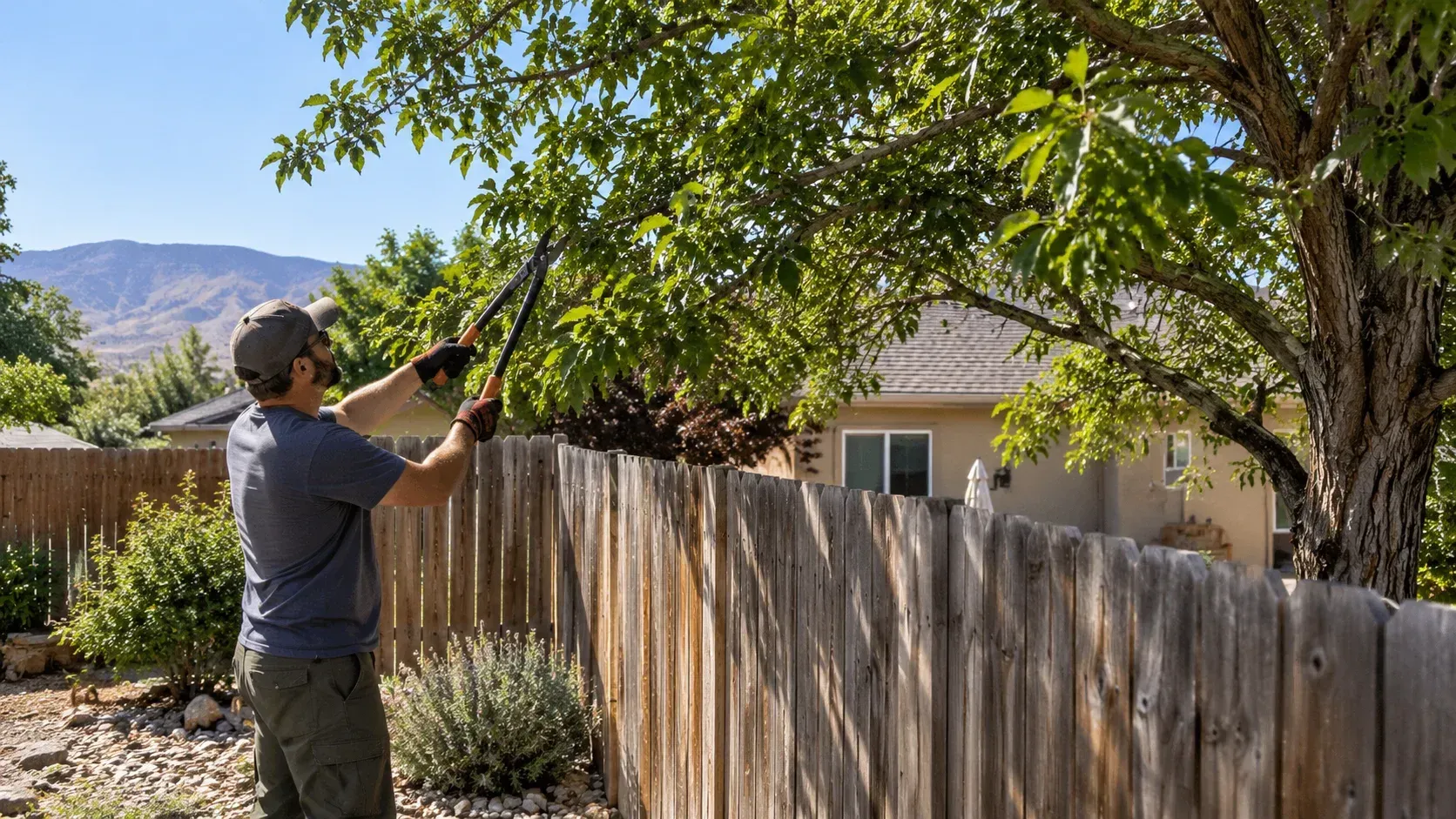
Table of Contents
- Can You Legally Trim a Neighbor's Overhanging Branches?
- The Rule Behind Your Rights: The Property Line
- Where You Can Get Into Legal Trouble
- Who Owns the Tree, and Why It Matters
- A Decision Framework Before You Cut
- Conclusion
- Have Questions About Trimming a Neighbor's Tree Branches in Grand Junction?
- Frequently Asked Questions
Key Takeaways
- In Colorado, you generally may trim branches from a neighbor's tree that hang over onto your property, but only up to the property line and only the parts on your side.
- You cannot enter your neighbor's yard to cut, and you cannot remove, damage, or kill the tree itself. Doing so can expose you to liability, sometimes for more than the tree's basic value.
- The cost of trimming purely overhanging branches usually falls on you, not the neighbor, unless the tree is causing actual damage or is a genuine hazard.
- A tree whose trunk sits on the boundary line is typically shared property, and neither neighbor can remove or seriously cut it without the other's agreement.
- This is general information, not legal advice. HOA rules, city ordinances, and the specific facts of your situation can change the answer, so confirming with a local attorney or the city is wise before major work.
Can You Legally Trim a Neighbor's Overhanging Branches?
In Colorado, you generally have the right to trim branches from a neighbor's tree where they cross over onto your property, but only back to the property line and only from your own side. You cannot go onto the neighbor's land to do it, and you cannot cut in a way that damages or kills the tree. Careful, limited tree trimming that stays within your property and spares the tree's health is the safest way to exercise that right without creating a new problem with your neighbor.
This right comes from long-standing common law followed in Colorado and most other states, often called the "self-help" rule. It treats overhanging branches as an encroachment you are allowed to address on your own side of the line.
The catch is that "you can trim" is not the same as "you can do whatever you want." The limits are where most disputes and liability begin, so it helps to understand exactly where the line sits, both literally and legally.
The Rule Behind Your Rights: The Property Line
The property line is the boundary that defines what you can and cannot touch. Anything hanging into your airspace is generally fair game to trim; anything past the line is not.
Under the common-law approach used in Colorado, an overhanging branch is considered an encroachment onto your property. You are allowed to cut it back to the boundary. What you are not allowed to do is reach across the line, lean into the neighbor's yard, or remove wood that is on their side.
This is why knowing exactly where your property line runs matters before you start. Fences are not always placed on the true boundary. If you are unsure, a property survey settles it. Cutting based on where you assume the line is, rather than where it actually is, is a common way to end up in the wrong.
Where You Can Get Into Legal Trouble
Trimming rights are narrow, and stepping outside them carries real risk. Colorado, like many states, protects tree owners from having their trees wrongfully harmed.
Damaging or Killing the Tree
If your trimming kills the tree or seriously harms its health, you can be held liable, and in some cases for more than the tree's ordinary value. Cutting too aggressively is the single biggest legal risk in a self-help trim.
Removing too much of the canopy, cutting into the trunk, or "topping" a tree can weaken or kill it. Because a mature tree can carry significant value, damages in these cases can be substantial. Some states, including Colorado in certain circumstances, allow enhanced damages for the wrongful destruction of trees, which means the cost of an over-aggressive cut can far exceed what you expected.
Entering the Neighbor's Property
You may not step onto your neighbor's land to trim without their permission. Doing so can amount to trespass, even if your intentions are good. If a branch can only be safely reached from their side, that is a conversation to have, not a fence to climb.
Cutting Roots
The same principle applies below ground. You can generally cut roots that cross into your property, but cutting roots that destabilize or kill the tree can create the same liability as over-cutting branches. Roots are also easy to underestimate, since severing major ones can make a tree unstable.
For branches or limbs tangled with utility lines, do not attempt the cut at all. Work near power lines is hazardous and is handled through the utility, not by a homeowner reaching over a fence.
Who Owns the Tree, and Why It Matters
Ownership decides who controls the tree, and it is not always obvious.
A tree is generally owned by whoever owns the land where the trunk emerges from the ground. If the trunk is entirely in your neighbor's yard, it is their tree, even if half the canopy hangs over your fence. Your rights are limited to the overhang on your side.
A boundary tree, where the trunk straddles the property line between two parcels, is different. These are usually treated as jointly owned by both neighbors. Neither owner can remove it or cut it severely without the other's consent, and doing so unilaterally can lead to liability. This distinction catches people off guard, which is why identifying the trunk's exact position matters before anyone plans major work. Understanding the difference between light trimming and pruning also helps here, because a heavy cut on a shared or neighbor-owned tree carries far more risk than tidying a few small branches on your side.
A Decision Framework Before You Cut
Before trimming a neighbor's overhanging branches, a short evaluation can keep you on solid ground.
- Confirm the property line. Check your survey or plat. If the boundary is unclear, resolve that first.
- Locate the trunk. If the trunk is fully on the neighbor's side, it is their tree. If it straddles the line, treat it as shared and get consent.
- Assess how much you would remove. Small, overhanging branches are low risk. Removing a large share of the canopy is high risk.
- Check for HOA rules and city ordinances. Some neighborhoods and the city may regulate tree work, protected species, or removals.
- Consider the relationship. A quick conversation with your neighbor often prevents a dispute, and may be required for anything beyond a minor trim.
- Decide who should do the work. Simple, reachable branches may be a do-it-yourself job. Large limbs, height, or anything near a structure or wire is professional territory.
If any step raises doubt, that doubt is a signal to slow down and confirm before cutting, rather than after.
Conclusion
In Colorado, you generally may trim a neighbor's branches that hang over your property, but only back to the property line, only from your own side, and only in a way that does not harm the tree. Ownership follows the trunk, so a tree rooted entirely on the neighbor's land stays theirs, and a boundary tree is shared and cannot be cut severely without agreement. The cost of trimming a simple overhang usually falls on you, and the biggest legal risk is cutting so aggressively that you damage or kill the tree. Because HOA rules, city ordinances, and the specific facts can all change the outcome, confirming the details before major work is the informed, low-risk path. When in doubt about the line, the ownership, or the size of the job, getting clarity first protects both your trees and your relationship with the people next door.
Have Questions About Trimming a Neighbor's Tree Branches in Grand Junction?
If branches from a neighbor's tree hang over your fence in Grand Junction and you are unsure how far you can safely and properly trim them, a professional can help with the tree side of the question. Feel free to
get in touch with our team or call (970) 589-2268 to talk through the trimming itself. You will get a straight, no-pressure explanation of what the work involves, so you can make an informed decision. For questions about your legal rights in a specific dispute, a local attorney is the right resource.
Frequently Asked Questions
Can I trim my neighbor's tree branches that hang over my fence in Colorado?
Generally yes. You may trim branches back to the property line from your own side, but you cannot enter your neighbor's yard or cut in a way that damages or kills the tree.
Who pays to trim branches that hang over my property?
Usually you do, if the branches are only overhanging. The neighbor's responsibility typically arises when the tree causes actual damage or is a genuine hazard, not simply when it drops leaves or shade.
Can I be sued for trimming my neighbor's tree?
Yes, if you over-cut and harm or kill the tree, enter their property, or cut a shared boundary tree without consent. Trimming lightly to the line from your side carries far less risk.
Who owns a tree that grows right on the property line?
A tree whose trunk straddles the boundary is generally shared by both neighbors. Neither can remove it or cut it severely without the other's agreement, so coordination is important.
Do I need my neighbor's permission to trim overhanging branches?
Not for minor trimming that stays on your side of the line. Permission is needed to enter their property, and consent is important for boundary trees or heavier cuts. A conversation first often prevents disputes.
Related Posts