Can Heavy Rooftop Snow Load Actually Cause Structural Damage on Western Slope Homes?
Table of Contents
- Can Rooftop Snow Load Really Damage a Home?
- How Much Does Snow Actually Weigh?
- Why Western Slope Roofs Face Uneven Risk
- Warning Signs of Structural Stress
- Which Roofs Are Most Vulnerable
- A Decision Framework for Heavy Snow Days
- A Realistic Western Slope Scenario
- Common Misunderstandings About Snow Load
- What Typical Online Advice Overlooks
- Risks, Limitations, and Trade-Offs
- Conclusion
Key Takeaways
- Heavy rooftop snow load can cause structural damage, but it usually takes a combination of wet, dense snow, drifting, an older or modified roof, and repeated storms rather than one ordinary snowfall.
- Snow weight depends on moisture content, not depth. A foot of light powder and a foot of wet, packed snow can differ in weight by several times.
- Sagging ceilings, sticking doors, new drywall cracks, and creaking sounds are common signs that a roof structure is under stress.
- Never climb onto a snowy roof to clear it. Raking from the ground or hiring trained help is safer than a fall from a slick surface.
- Overhanging tree limbs add risk, because branches loaded with wet snow can break and land on a roof that is already carrying weight.
Can Rooftop Snow Load Really Damage a Home?
Yes. Heavy rooftop snow load can cause structural damage, including sagging roof framing, cracked ceilings, bowed rafters, and in severe cases partial roof collapse. Most roofs are built to carry a design snow load set by local building codes, so damage usually appears when wet or drifted snow, an older or altered structure, and repeated storms combine to exceed what the roof can safely handle. Managing snow around the property, from snow removal on walkways and driveways to watching the roof itself, is part of protecting a home through a heavy winter.
This matters on the Western Slope because snow conditions here can change quickly from one elevation to the next, and many homes were built under older standards or have been modified over the years.
This article explains how snow load works, which warning signs deserve attention, and how to think through the decision to act, without assuming that every snowy roof is an emergency.
How Much Does Snow Actually Weigh?
Snow weight depends on how much water it holds, not how deep it is. Fresh, dry powder is light, while wet, heavy snow and old, packed snow can weigh several times more per cubic foot, and ice is heavier still.
Why Depth Alone Is Misleading
A foot of dry powder might weigh only a few pounds per square foot spread across a roof. A foot of wet, settled snow can weigh several times that. That is why two storms that leave the same depth on the roof can put very different stress on the framing.
What Changes the Weight Over Time
Snow gets heavier as it sits. Daytime melting, nighttime refreezing, and compaction from its own weight all increase density. Rain falling on an existing snowpack is especially significant, because the snow absorbs the water and the total load rises without any new snowfall.
Why Western Slope Roofs Face Uneven Risk
Western Slope snow conditions are not uniform. The Grand Valley floor generally receives much less snow than the higher terrain around it, while mesas, canyons, and communities at higher elevation can see far heavier and longer-lasting snowpack. A home's elevation and exposure change how much load its roof is likely to see.
Local building departments set the design snow load that new construction must meet, and that number reflects local conditions. The relevant authority for a specific address is the local building department, since requirements differ by jurisdiction and have changed over time.
The practical result is that two Western Slope homes in the same storm can face very different risks. A newer home built to current local standards is in a different position than an older home whose roof was designed under earlier assumptions, or one with a later addition that changed how snow collects.
Warning Signs of Structural Stress
Structural stress from snow often shows up inside the home before it shows up outside. Signs worth taking seriously include:
- Sagging or bulging ceilings, especially in a specific room or section.
- New cracks in drywall, particularly near corners, doorways, or where walls meet the ceiling.
- Doors and windows that suddenly stick, which can mean framing has shifted.
- Creaking, popping, or cracking sounds coming from the roof or attic during or after heavy snow.
- Visible bowing in rafters or trusses if the attic is accessible.
- New roof leaks, which can mean roofing materials or flashing have been stressed.
A single sign does not prove a structural problem, since houses settle and dry air can cause minor drywall cracking. Several signs appearing together after a heavy storm, or a sign that keeps getting worse, is a stronger reason to have the roof evaluated by a qualified professional such as a structural engineer or roofing contractor.
Which Roofs Are Most Vulnerable
Roofs With Drifting or Unbalanced Loads
Wind moves snow. It can pile up on one side of a roof, behind a chimney, or in a valley, creating a localized load far heavier than the average. Where a lower roof sits beside a taller wall, snow sliding or blowing off the upper section can drift into a deep, dense pile on the lower one.
Flat and Low-Slope Roofs
Steeper roofs shed snow more readily. Flat and low-slope roofs, which are common on commercial buildings and some residential additions, hold snow in place, so the load builds up and stays until it melts or is removed.
Older Homes and Altered Structures
Older roofs may have been designed to earlier standards. Alterations also matter. Cut or notched trusses, removed supports, added equipment, or a second layer of roofing add dead weight or reduce capacity, and those changes are sometimes invisible from the outside.
Roofs Under Overhanging Trees
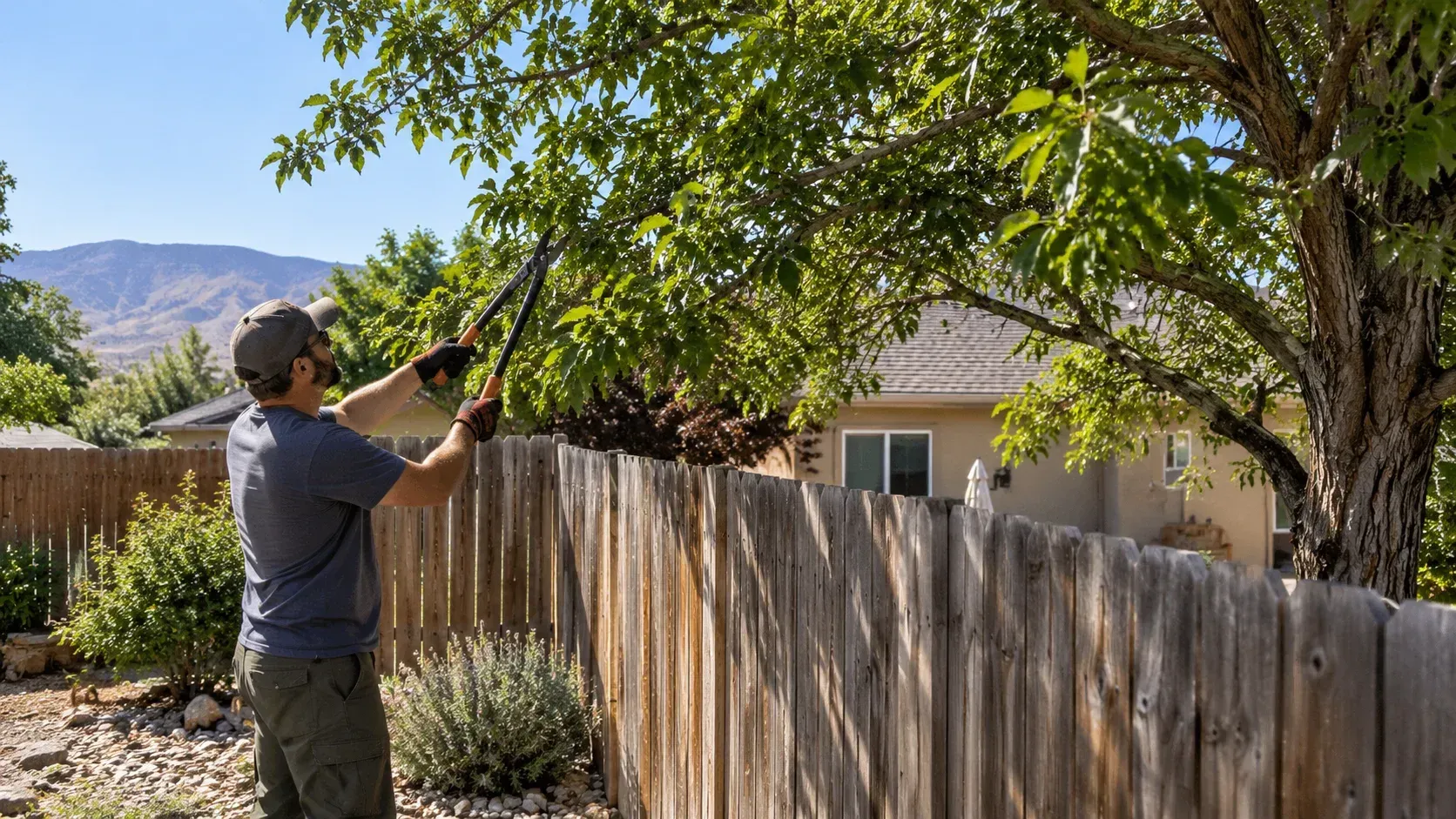
Tree limbs loaded with wet snow can break and fall onto a roof, adding impact force to weight already present. Regular tree trimming that removes dead or overextended branches near the roofline lowers one avoidable source of damage. Trees with weak or compromised structure are a particular concern, which is part of why tree inspections before storm season are worth considering for properties with large trees close to the house.
A Decision Framework for Heavy Snow Days
When a heavy storm hits, a calm sequence of questions works better than guesswork.
- Check the weather and the snow type. Wet, heavy snow, or rain falling on existing snow, raises the load faster than dry powder.
- Look at the roof from the ground. Note drifting, obvious sagging, or large accumulations on low-slope sections.
- Check inside. Look for ceiling bulges, new cracks, or sticking doors, and listen for unusual sounds.
- Know your roof's history. Age, past alterations, and any prior snow issues all affect risk.
- Decide whether removal is warranted. Light accumulations on a steep, sound roof often melt or shed on their own. Heavy loads, flat roofs, or warning signs justify action.
- Choose the safest method. A roof rake used from the ground is the lowest-risk option for a homeowner. Anything requiring a ladder or roof access is better left to trained professionals.
- Escalate if signs are serious. Significant sagging, loud cracking, or rapidly worsening damage is a reason to leave the area and call emergency services or a qualified professional.
A Realistic Western Slope Scenario
The following is a hypothetical example, not a specific case, meant to illustrate how these factors can combine.
Imagine a homeowner on a Western Slope mesa with a mid-century home that had a rear addition built in a later decade. A storm drops heavy, wet snow over two days, followed by a rain-and-freeze cycle. Snow blows off the main roof and piles into the valley where the addition meets the original house.
A few days later, the homeowner notices a faint creaking from the addition and a hairline crack growing across the ceiling in that room. The main roof looks fine from the yard, which is why the problem is easy to miss.
The sensible response is not panic and not a climb onto the roof. It is to stay out of the affected room if the sounds continue, use a roof rake from the ground on safely reachable areas, and have a structural professional look at the addition, since the framing there was built under different assumptions than the original house. The lesson is that the dangerous spot was where drifting and a structural change overlapped, not the roof as a whole.
Common Misunderstandings About Snow Load
Common belief: Snow depth tells me how heavy it is. What is actually true: Weight depends on water content. Wet and compacted snow can be several times heavier than dry powder at the same depth. Why it matters: Judging risk by depth alone can understate the load after wet storms or rain-on-snow events.
Common belief: A roof that looks fine from the outside is fine. What is actually true: Structural stress often shows up first inside the home, in ceilings, walls, doors, and sounds from the attic. Why it matters: Waiting for visible exterior damage can mean missing early warning signs.
Common belief: Climbing up to shovel the roof is the quickest fix. What is actually true: Snowy and icy roofs are slippery, and falls from roofs cause serious injuries. A roof rake from the ground, or trained help, is safer. Why it matters: A well-meant attempt to relieve the load can cause a worse outcome than the snow itself.
What Typical Online Advice Overlooks
Most articles say "remove snow from your roof," which skips several practical points.
Removal is not always necessary. Many sound, steep roofs shed light snow without help, and unnecessary removal creates its own risks, including falls and damage to roofing materials from aggressive scraping.
The load is rarely even. Advice that treats the roof as one uniform surface ignores drifts, valleys, and lower roofs beside taller walls, where the real stress concentrates.
Alterations quietly change capacity. Cut trusses, additions, and added equipment can reduce what a roof can carry, and generic guidance rarely asks about renovation history.
Ice dams are a related but separate problem. Ice dams form when heat escapes the home, melts snow, and the water refreezes at the eaves. They cause leaks and edge damage, and while they can add weight, they are fundamentally a heat and insulation issue rather than a load issue.
Trees are part of the picture. Snow-laden limbs falling onto a roof are a common, preventable source of damage that rarely appears in roof-focused advice.
Risks, Limitations, and Trade-Offs
This article explains general principles. Whether a particular roof is at risk depends on its design, age, condition, local building requirements, and the specific storm, and none of that can be judged from a general article. A structural engineer or licensed roofing professional is the appropriate source for an assessment of a specific building.
Removing snow carries trade-offs. Doing nothing leaves the load in place, which may be fine for a sound roof or risky for a stressed one. Doing it yourself from the ground with a roof rake is relatively low risk, but raking can damage shingles and does not reach all areas. Climbing a roof carries the highest personal risk and is not recommended.
Storm damage can also happen quickly. If a tree limb has fallen on a roof or the structure shows serious signs of distress, emergency tree services can address the tree side of the problem, while a structural professional should assess the building itself.
Conclusion
Heavy rooftop snow load can cause structural damage on Western Slope homes, though it usually takes wet or drifted snow combined with an older, altered, or low-slope roof and repeated storms. Snow weight depends on water content rather than depth, loads are uneven because of wind and roof geometry, and warning signs often show up inside the house before they show up outside. The safest approach is to watch for those signs, use ground-based tools or trained professionals instead of climbing onto the roof, and bring in a structural or roofing professional when the signs are serious or getting worse. Overhanging trees add a separate, manageable risk worth addressing before winter rather than during a storm.
Concerned About Snow Load and Storm Risks Around Your Western Slope Property?
If heavy snow has you thinking about your roof, your walkways, or the trees close to your house in Grand Junction, a conversation can help sort out what needs attention and what does not.
Talk with our team or call (970) 589-2268 to discuss snow management and tree-related risks around your property. There is no pressure and no obligation, just clear information to help you decide. For the roof structure itself, a structural engineer or roofing professional is the right resource.
Frequently Asked Questions
Can snow load collapse a roof?
It can in severe cases, usually when wet or drifted snow, an older or altered structure, and repeated storms combine. Most roofs are designed for local snow loads, so collapse is uncommon, but it is a real risk.
How much does snow weigh on a roof?
It varies widely with moisture. Light powder weighs far less than wet, packed snow, and ice is heavier still. Depth alone is a poor guide, which is why warning signs matter more than guessing.
What are the signs a roof is stressed by snow?
Sagging ceilings, new drywall cracks, sticking doors or windows, creaking sounds, visible bowing in rafters, and new leaks. Several signs together, or signs that worsen, justify a professional evaluation.
Is it safe to shovel snow off my own roof?
Climbing onto a snowy roof is risky because surfaces are slick and falls cause serious injuries. A roof rake used from the ground is safer, and trained professionals are better for large or hard-to-reach areas.
Can tree branches make snow damage worse?
Yes. Limbs loaded with wet snow can break and land on a roof that is already carrying weight. Trimming dead or overextended branches near the house before winter reduces that risk.
Related Posts