Tree Stump Removal Cost: What Actually Drives the Price and How to Compare Quotes
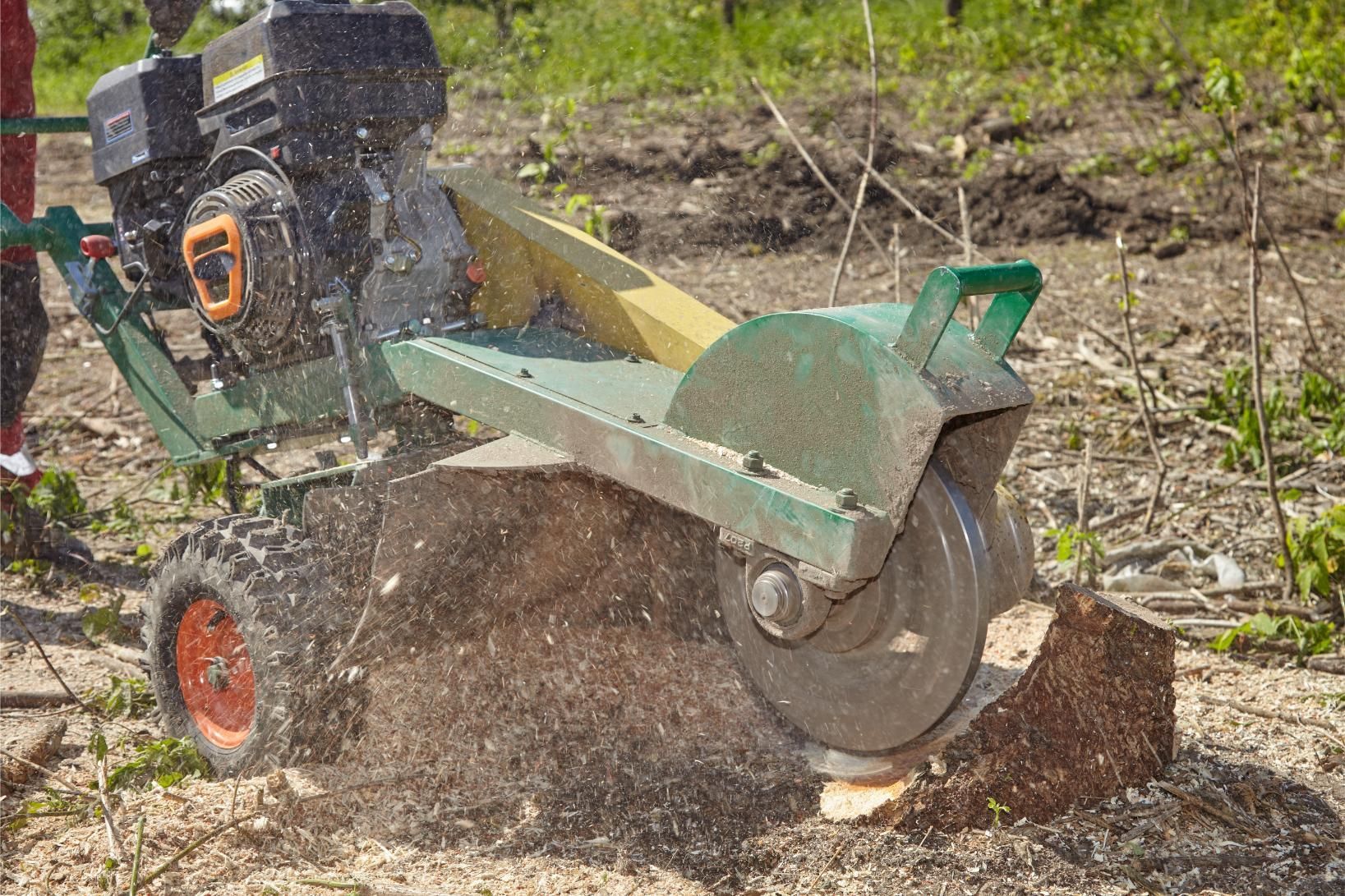
Table of Contents
- Introduction
- Grinding and Full Removal Are Two Different Jobs
- How Stumpwork Is Actually Priced
- Diameter: Measure It the Way the Grinder Will
- How Deep the Grind Needs to Go Depends on What Goes There Next
- What Access Really Costs
- The Site Conditions That Change a Price Mid Job
- What You Are Left With Afterward
- Utility Locates, and the Lines 811 Will Not Mark
- What It Costs to Leave the Stump Instead
- How to Compare Three Quotes Fairly
- Where Homeowners Genuinely Save Money
- Conclusion
- Get a Straight Answer on Your Stump
- Frequently Asked Questions
Key Takeaways
- Stump grinding and full stump removal are separate services at different price points. Grinding chews the stump into chips below grade. Full extraction pulls the stump and major roots out of the ground, costs considerably more, and is usually only necessary for construction or hardscape work.
- Most stump work is priced by diameter, either per inch or in size tiers, with a minimum charge that applies regardless of how small the stump is. That minimum is why one small stump often costs nearly as much as two.
- Homeowners routinely under measure their own stumps by measuring the flat cut face instead of the widest point of the root flare at ground level. The grinder has to work the flare, so that is what gets billed.
- Grinding depth is driven by what goes in that spot next. Sod needs a few inches below grade. A patio, footing, or fence post needs considerably more, and sometimes needs extraction instead.
- Hidden rocks, buried concrete, old fence wire grown into the trunk, and previous fill are the most common reasons a price changes on site.
- Grinding does not remove the root system, and the resulting chips are not planting soil. The hole will settle over the following months and usually needs backfill.
- Utility locates are free and worth arranging, but they do not cover private lines like irrigation, landscape lighting, invisible fences, or a gas run to a shed. Those are on the property owner to identify.
Introduction
Tree stump removal cost is driven mostly by four things: the diameter of the stump measured at the root flare, how deep it needs to be ground, how hard the machine is to get to it, and what is hiding in the ground around it. Nearly every price difference between two similar looking stumps traces back to one of those.
What most cost articles leave out is the pricing structure itself. Knowing that "size affects price" does not help a homeowner evaluate a quote. Knowing that most companies bill by inch of diameter against a minimum charge, that the minimum is what makes small single stump jobs feel expensive, and that haul off and backfill are usually priced separately does help. That is the difference between reading about cost and being able to judge one.
Property owners in Grand Junction, Clifton, Fruita, Redlands, and Montrose also deal with local ground conditions that push jobs in both directions. Rocky, cobbly soil in parts of the valley slows grinding and wears teeth. Heavy clay elsewhere holds moisture and complicates access. Both show up in the price, and neither is visible from a photograph, which is why stump removal is quoted on site rather than from a flat rate list.
This article covers how the work is priced, what changes a quote mid job, what you are actually left with when the machine leaves, and how to compare estimates that look different on paper but describe the same job.
Grinding and Full Removal Are Two Different Jobs
Most cost confusion starts here, because the two terms get used interchangeably and they are not the same service.
Stump grinding uses a rotating cutting wheel to reduce the stump and the immediate root flare to chips, working from the top down to a chosen depth below grade. The stump is destroyed in place. Major lateral roots stay in the ground. This is what the large majority of residential stump jobs actually are.
Full stump removal, sometimes called extraction, physically pulls the stump and a meaningful portion of the root mass out of the ground, typically with an excavator or a backhoe. It leaves a large hole that needs to be filled and compacted, and it usually requires machine access that a grinder does not.
The cost gap is significant, and so is the site disruption. Extraction generally makes sense when something structural is going in that spot: a foundation, a slab, a retaining wall, a pool, or a driveway. For lawn, garden beds, mulch, or just getting rid of a trip hazard, grinding is nearly always the right call and the cheaper one.
If a quote seems far higher or lower than the others, this is the first thing to check. You may be comparing an extraction bid against grinding bids.
How Stumpwork Is Actually Priced
There is no single industry standard, but most companies use one of a few models, and knowing which one you are looking at makes a quote legible.
Per inch of diameter. The most common approach. A rate is applied to each inch of stump diameter measured at the widest point at ground level. A 30 inch stump is billed at roughly double a 15 inch stump, all else equal.
Size tiers. Some companies group stumps into brackets, such as small, medium, and large, with a set price per bracket. Simpler to quote, less precise at the edges of each tier.
Hourly. More common on difficult access jobs, heavily rooted stumps, or jobs where the unknowns are significant. Sometimes quoted as a machine and operator rate.
Flat per stump on multi stump jobs. Once a crew is on site with the machine unloaded, additional stumps cost far less each than the first one did.
Layered on top of whichever model applies, there are usually separate line items for:
- A minimum or trip charge
- Grinding depth beyond a standard depth
- Chasing and grinding surface roots radiating out from the stump
- Hauling the grindings off site
- Backfilling the hole with topsoil
- Reseeding or sodding the patch
Two quotes can differ substantially simply because one includes haul off and topsoil and the other leaves the chips in a pile. Neither is wrong. They are describing different scopes.
The Minimum Charge Is Why One Small Stump Feels Expensive
This surprises people more than any other part of stump pricing. A minimum charge exists because the fixed costs of the job happen whether the stump is 8 inches or 28 inches: loading the machine, driving to the property, unloading, setting up, cleaning up, and driving back. Grinding a small stump might take fifteen minutes. Everything around it does not scale down.
The practical implication is worth acting on. If you have one small stump, the price per stump will feel high. If you have four, the second, third, and fourth typically cost dramatically less than the first, because mobilization is already paid for. Homeowners who have been putting off two or three old stumps almost always get better value doing them in one visit.
The same logic applies to scheduling grinding at the same time as a tree removal rather than months later. One mobilization instead of two.
Diameter: Measure It the Way the Grinder Will
If you want to estimate your own job before anyone comes out, measure correctly, because most people under measure.
The flat cut surface on top of the stump is not the measurement. The grinder has to work through the flare, meaning the wide, buttressed base where the trunk swells out into the roots at soil level. Measure across the widest point of that flare at ground level, not the cut face.
The difference is not trivial. A stump with a 16 inch cut face can easily have a 26 inch flare. That is a substantial change in a per inch quote, and it is the single most common reason a homeowner feels a quote came in higher than expected.
A few other measuring notes:
- If the stump is oblong, most companies average the widest and narrowest dimensions, or use the widest.
- If the stump was cut high, leaving two or three feet of trunk, say so. That material has to come off first.
- If there are large surface roots snaking out across the lawn, mention them. Grinding those is separate work.
How Deep the Grind Needs to Go Depends on What Goes There Next
Depth is a real cost variable, and it is one homeowners often decide by default rather than deliberately. Decide it on purpose by working backward from the intended use.
Lawn or sod. A few inches below grade is generally sufficient. You need enough soil depth above the remaining wood for grass roots to establish.
Garden bed or mulch. Similar to lawn, sometimes slightly deeper depending on what is being planted.
Planting a new tree in the same spot. This is the one to think hardest about. Even a deep grind leaves a large volume of decomposing wood chips and the entire root system in place. Most professionals would suggest planting the replacement a few feet to the side rather than in the old hole, which is often cheaper than grinding deep enough to make the original spot workable.
Fence post. Needs to clear the post depth, which usually means deeper than a lawn grind and often means chasing roots in the post line.
Patio, slab, driveway, footing, or retaining wall. Grinding may not be adequate at all. Decomposing wood under a hard surface settles, and settling under concrete cracks it. This is the scenario where extraction is worth the higher cost.
Tell whoever is quoting what the space is for. Depth priced for a lawn and depth priced for a patio are different numbers, and getting this wrong is expensive to discover later.
What Access Really Costs
Access is often a bigger cost driver than size, and it is entirely invisible in a phone quote.
Gate width is the classic constraint. Standard walk behind grinders generally need a wider opening than a typical residential gate provides. If the machine will not fit, options are a smaller and slower machine, removing a fence section, or in some cases hand work. Any of those adds time.
Slope and footing. Grinding on a grade takes longer and requires more repositioning. Soft, saturated, or freshly irrigated ground can prevent a machine from being placed safely at all.
Distance from the truck. Walking a machine a long way across a lawn, especially uphill, adds time and can add lawn protection requirements.
Proximity to hard surfaces and structures. Grinding near a foundation, a pool deck, a sidewalk, a fence line, or a utility pedestal means slower, more controlled passes and often shielding to control thrown debris. Grinders throw chips and small rock with real force.
Overhead and underground constraints. Low limbs, a service drop, a septic field, or a shallow irrigation main all restrict where the machine can sit.
If you want a more accurate phone estimate, photograph the gate with a tape measure across it, the path from the driveway to the stump, and the stump itself with something for scale.
The Site Conditions That Change a Price Mid Job
Reputable companies flag these as possibilities up front rather than surprising anyone, but they are worth knowing because they are genuinely unpredictable.
Rock. This is the most common one locally. Grinder teeth are designed for wood. Cobble, embedded river rock, and buried gravel dull and break them quickly, and the operator has to slow down substantially. Parts of the Grand Valley have notably rocky, cobbly ground, and a stump sitting in it is a slower job than the same stump in clean soil.
Buried concrete. Old footings, post bases, sidewalk chunks, and demolition fill turn up regularly around older stumps.
Wire and metal grown into the trunk. Old fence wire, guy wires, cable, nails, hooks, and eye bolts. Trees grow around whatever is attached to them, and the metal ends up buried inside the wood where nobody can see it. It is hard on equipment and it is a genuine safety issue when a tooth catches it.
Previously ground stumps. A stump that was ground shallow years ago and is now being ground again often has compacted chips and settled soil mixed through it that grind unevenly.
Heavy clay when wet. Clay packs into the cutting wheel and slows progress, and it turns the work area into a mess.
Root spread that does not match the stump. Some species send out extensive shallow lateral roots well beyond the trunk. A modest looking stump can sit at the center of a much larger root plate. Understanding what happens to a tree's roots after the tree comes out makes it clearer why grinding the visible stump does not deal with everything underground.
What You Are Left With Afterward
This is the part homeowners are least prepared for, and it is entirely predictable.
A large pile of chips. Grinding a stump produces significantly more volume than the stump appeared to contain, because the material expands as it is chewed up and mixed with soil. A big stump can produce a surprising mound.
Grindings are not topsoil. They are high carbon wood chips mixed with dirt. As they break down, they tie up nitrogen in the surrounding soil, which is why grass seeded directly into a pile of grindings frequently comes in thin and yellow. If you want lawn there, the usual approach is to remove most of the grindings and backfill with topsoil.
The spot will settle. Wood decomposes. Even a well backfilled hole tends to sink over the following months and sometimes for a year or two. Overfilling slightly and planning to top dress again later is normal and expected.
The root system stays. Grinding removes the stump and the flare, not the roots running out under the lawn. Those decay in place over a period of years.
Chips can be reused. If you have beds that need mulch and you are not fussy about appearance, keeping the grindings on site saves the haul off charge.
They are coarser and dirtier than purchased mulch, and they are not appropriate right against a foundation or in a vegetable bed, but for a back fence line or around established shrubs they are perfectly serviceable.
Utility Locates, and the Lines 811 Will Not Mark
Grinding goes below grade, which makes this a dig, not just yard work.
Colorado requires notification before excavation so that utility owners can mark their lines, and the location itself is free to the requester. Notice needs to be given in advance of the work, so it is worth arranging early rather than the morning of. Whoever is performing the work will typically handle this, but it is reasonable to confirm that it has been done.
Here is the part that causes real damage: 811 locates cover public utility lines up to the meter or point of service. They do not cover private lines on your property. That means the following are not marked and are the property owner's responsibility to identify:
- Sprinkler and drip irrigation lines and valve boxes
- Landscape lighting wiring
- Invisible pet fence wire
- Gas runs to a detached garage, shed, fire pit, or grill
- Electrical runs to a shop, shed, pond pump, or gate
- Septic tanks, lines, and leach fields
- Well lines
- Drainage and downspout piping
Irrigation lines are hit constantly during stump work, and it is nearly always because nobody mentioned them. If you know roughly where your sprinkler lines and valve boxes run, flag them before the machine starts. Ten minutes with marking paint or landscape flags can prevent a repair that costs more than the stump grinding did.
What It Costs to Leave the Stump Instead
Leaving a stump is a legitimate choice in some situations, especially in an out of the way corner. But it is not free, and the costs are worth weighing against the quote.
Sprouting. Several species commonly found around here send up suckers from the stump and the root system after the tree is cut, sometimes persistently. Whether a tree can regrow from a stump depends heavily on the species, and for the prolific ones you can end up with a thicket of shoots that needs cutting back repeatedly.
Mower and equipment damage. Low, partly hidden stumps and surface roots take out mower blades and decks.
Trip and fall hazard. Especially once grass grows around a low stump and obscures it. This matters more if you have kids, guests, or any rental exposure.
Decay organisms. A decaying stump supports fungi and wood boring insects. Carpenter ants and termites are attracted to decaying wood, and a stump close to a structure is not where you want that activity concentrated.
Landscaping limitations. A stump in the middle of an area you want to use eventually forces the decision anyway, usually at a higher price later.
Appearance and resale. Old stumps read as deferred maintenance.
How to Compare Three Quotes Fairly
Stump quotes frequently look wildly different because they are describing different scopes, not different prices for the same work. Normalize them by asking each company the same questions:
- Is this grinding or full extraction?
- How deep below grade, and is that depth appropriate for what I want to put here?
- Are surface roots included, or is that extra?
- Do the grindings stay on site or get hauled away?
- Is backfill with topsoil included?
- Is reseeding or sod included?
- Who is handling the utility location?
- Is there a minimum charge, and does a second stump reduce the per stump price?
- What happens to the price if you hit rock, concrete, or buried metal?
- Are you carrying liability and workers compensation coverage?
That last question is not paperwork. If an uninsured worker gets hurt on your property or a thrown rock breaks a neighbor's window, the exposure can end up with the homeowner. The same criteria that separate a solid tree service from a cheap one apply to stump work, and a quote that comes in far below everyone else's usually explains itself once you ask about scope and coverage.
Where Homeowners Genuinely Save Money
Bundle stumps. The single most effective lever. Multiple stumps in one visit means one mobilization.
Schedule grinding with the removal. Doing it while the crew and equipment are already there avoids a second trip charge entirely.
Keep the grindings. If you have somewhere to use them, declining haul off removes a line item.
Do your own backfill and seeding. Buying a few bags of topsoil and seeding the patch yourself is straightforward work that costs meaningfully more when someone else does it.
Clear the access path yourself. Moving vehicles, patio furniture, planters, and toys before the crew arrives, and unlocking gates, saves time that would otherwise be billed.
Mark your private lines. Preventing a struck irrigation main is the cheapest money you will spend on the job.
Be flexible on scheduling. Fitting into an existing route in your area is easier for a crew than a dedicated trip.
Renting a grinder is usually not a savings. This is where the false economy lives. A rental capable of handling a mature stump is a heavy machine that has to be towed, loaded, and controlled, and the day rate plus transport frequently approaches the cost of hiring the job out. Grinders throw debris hard, kick when they catch buried rock or metal, and are genuinely dangerous to operate without experience. On a small stump in easy soil the math can occasionally work. On anything large, close to a structure, or on a slope, it usually does not, and the risk sits with you.
Conclusion
Stump pricing is not arbitrary, it is just rarely explained. Diameter measured at the flare, grinding depth driven by the intended use of the space, machine access, and what is buried in the surrounding ground account for nearly all of the variation between two jobs that look similar from the street.
The most useful things a homeowner can do are straightforward. Measure the flare, not the cut face. Decide what is going in that spot before deciding how deep to grind. Ask each company the same list of scope questions so the quotes become comparable. Flag your irrigation lines. And bundle stumps or schedule grinding alongside the removal, because mobilization is the fixed cost that makes single small jobs feel disproportionate.
It is also worth setting expectations for afterward: a pile of chips that is not topsoil, a hole that will settle for months, and roots that stay in the ground and decay slowly. None of that is a problem, but all of it is easier to plan for than to be surprised by.
Get a Straight Answer on Your Stump
If you want to know what your specific stump will cost, the fastest path is a look at the site: the flare diameter, the gate and path the machine has to take, the ground it is sitting in, and what you plan to do with the space afterward. Those four things determine nearly everything else. You can request a stump evaluation for your property, call (970) 589-2268, or email joshua@treeclimbersservices.com to start the conversation.
Frequently Asked Questions
How much does stump grinding cost per inch?
Most companies bill by the inch of stump diameter measured at the widest point of the root flare at ground level, though some use size tiers or an hourly rate instead. The per inch figure varies by region, equipment, and site difficulty, and it is almost always applied against a minimum charge. That minimum is why a single small stump costs more than the per inch math alone suggests, and why additional stumps in the same visit cost far less each.
Is it cheaper to grind or remove a stump?
Grinding is substantially cheaper. It reduces the stump to chips in place with a single machine and leaves the root system underground. Full extraction pulls the stump and major roots out, typically requires an excavator, leaves a large hole to fill, and disturbs much more of the yard. Extraction is generally reserved for spots where something structural is going in, such as a slab, footing, or driveway.
How deep should a stump be ground?
It depends on what goes there next. A few inches below grade is generally enough for lawn or a garden bed. A fence post needs to clear the post depth. Anything involving concrete or a footing needs considerably more, and often calls for extraction instead, since decomposing wood under a hard surface settles and cracks it. Decide the use first, then the depth.
Can you plant grass where a stump was ground?
Yes, but not directly into the grindings. Wood chips are high in carbon and tie up nitrogen as they break down, so seed sown into a pile of grindings tends to come in thin and pale. Remove most of the grindings, backfill with topsoil, then seed or sod. Expect the spot to settle over the following months and plan on topping it up again.
Do you have to remove a tree stump?
No, it is not required. Leaving one is reasonable in an out of the way spot. The tradeoffs are that many species sucker persistently from the stump and roots, low stumps damage mower blades and create trip hazards, decaying wood attracts carpenter ants and other wood boring insects, and the stump limits what you can do with that part of the yard. Those factors usually decide it rather than the stump itself.
Related Posts