How to Choose a Tree Removal Service in Colorado: What to Verify Before You Sign
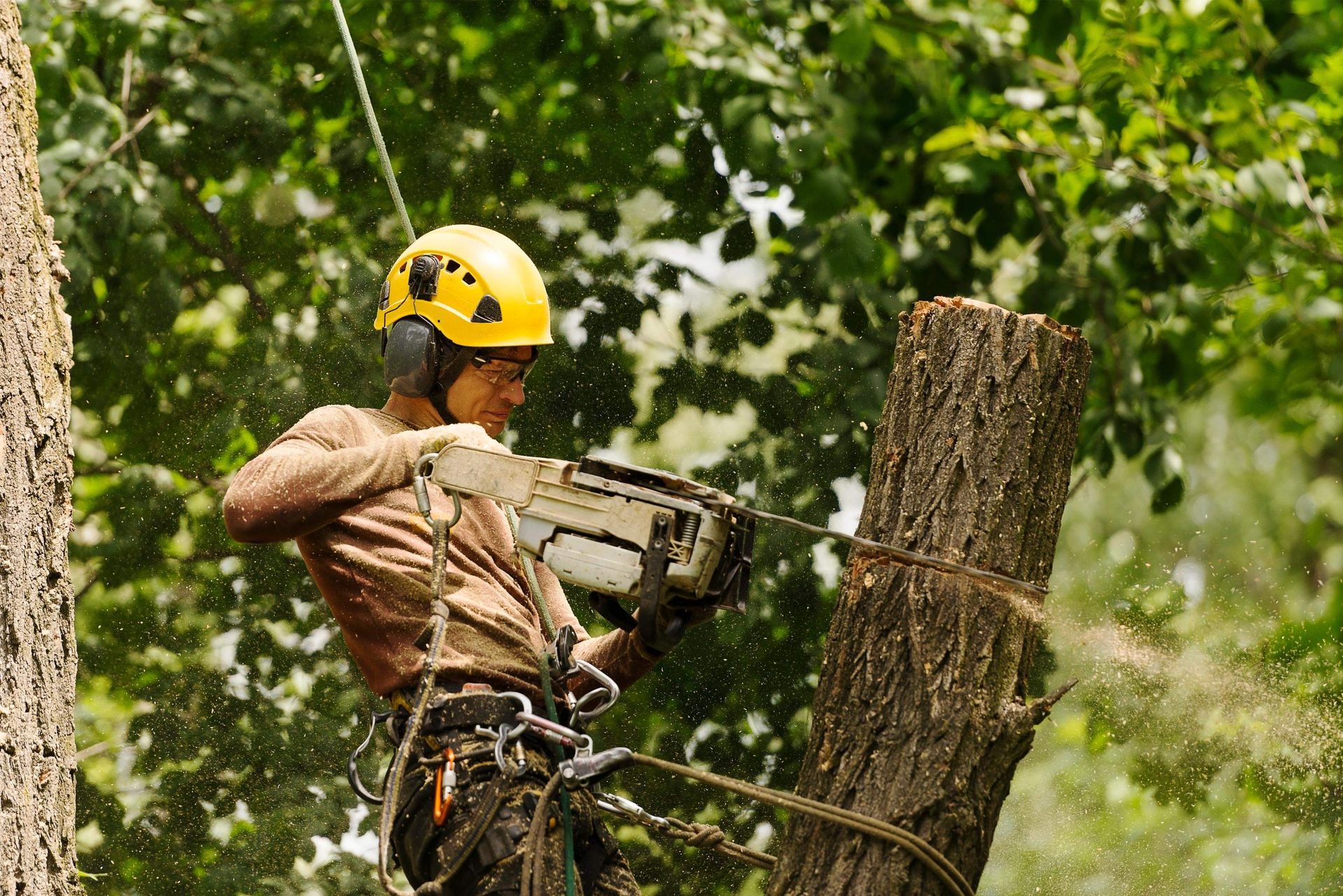
Table of Contents
- Introduction
- What "Licensed" Actually Means in Colorado
- Insurance Is the One Thing You Have to Verify Yourself
- Certifications, and Which One Matters for Your Situation
- Who Is Deciding the Tree Needs to Come Out
- What a Real Estimate Visit Looks Like
- What the Written Estimate Must Specify
- Equipment and Method Drive the Price More Than Tree Size Does
- Work Near Power Lines Is a Separate Qualification
- Permits, Right of Way, and HOA Rules
- Storm Chasers and the Post Event Doorknock
- Red Flags, Ranked by How Much They Should Worry You
- Questions to Ask Before You Sign
- Conclusion
- Talk Through a Removal Before You Commit
- Frequently Asked Questions
Key Takeaways
- Colorado does not issue a statewide arborist or tree removal license. Where licensing exists, it is handled at the city level, so "state licensed" on a truck is not a meaningful credential on its own.
- Insurance is the item to verify personally. Ask for a certificate of insurance sent directly from the agent or carrier with your name listed as certificate holder, rather than accepting a copy handed over by the contractor.
- Both general liability and workers compensation matter, and they cover different risks. Sole proprietors without employees are frequently not required to carry workers compensation for themselves.
- ISA Certified Arborist and TRAQ are different credentials for different questions. TRAQ is the one specific to assessing whether a tree is actually a hazard.
- The company that decides your tree needs to come out is usually the company paid to remove it. On a borderline call, a consulting arborist with no removal work to sell is worth the separate fee.
- A vague estimate is the most reliable predictor of a dispute. Scope, stump, grind depth, wood and debris handling, and yard protection all need to be in writing before work starts.
- Storm chasing after a wind or hail event is a real pattern. Door to door solicitation, cash pricing, and large upfront deposits are the combination to avoid.
Introduction
Choosing a tree removal service in Colorado comes down to four checks that most homeowners skip: confirming insurance directly with the carrier rather than the contractor, understanding that Colorado has no statewide arborist license, matching the credential to the actual question you have about the tree, and getting a written scope specific enough that there is nothing left to argue about afterward.
Most advice on this topic stops at "check reviews and get three quotes." That is not wrong, but it does not help when the three quotes are thousands of dollars apart and you cannot tell why. The gap is almost never quality of service. It is scope, method, and risk, and those become visible once you know what to ask.
The stakes are also higher than they look. A mature cottonwood or Siberian elm coming down in a narrow Grand Valley backyard is a rigging job with real consequences if it goes wrong, and the financial exposure from an uninsured crew does not stay with the crew. Property owners weighing a tree removal should treat the verification work as part of the job rather than a formality.
This article covers what to verify, how to verify it, what a competent estimate looks like, and the specific warning signs worth walking away from.
What "Licensed" Actually Means in Colorado
This is where the standard advice is misleading. Most articles tell homeowners to "verify valid state licensing for arborist work." Colorado does not issue one.
There is no statewide arborist license and no statewide tree removal license in Colorado. Where licensing requirements exist, they are municipal, and they vary considerably from one city to the next. Some Colorado municipalities require tree services operating within city limits to hold a local tree contractor license or registration, sometimes with proof of insurance and a certified arborist on staff as a condition. Others require nothing beyond a general business license.
What this means practically:
- "Licensed and insured" on a vehicle or website is not a verifiable claim by itself. Ask what they are licensed for and by whom.
- Check with your own municipality about whether local registration is required where you live. Requirements in one Colorado city tell you nothing about another.
- A general business license is real but tells you nothing about competence with trees.
- The absence of a state license makes the other two checks, insurance and certification, carry more weight rather than less.
None of this means unlicensed operators are automatically bad. It means the word "licensed" cannot do the work homeowners expect it to do here.
Insurance Is the One Thing You Have to Verify Yourself
If you do only one piece of homework, do this one, because the downside is uncapped.
Two coverages matter and they are not interchangeable:
General liability covers damage the crew causes to property. A limb through a roof, a truck through a sprinkler system, a dropped section into a fence.
Workers compensation covers injury to the people doing the work. This is the coverage that most often turns into a homeowner problem, because an injured uninsured worker has a strong incentive to look for a policy that will respond, and a homeowners policy is the obvious candidate.
How to actually verify it:
- Ask for a certificate of insurance sent directly from the insurance agent or carrier. Not a PDF forwarded by the contractor, and not a photo of a card. Certificates are easy to alter and easy to keep circulating after a policy lapses.
- Ask to be listed as a certificate holder. That way you receive the document from the source and, depending on the policy, may be notified if it cancels.
- Check the effective and expiration dates. A certificate that expired two months ago is a common find.
- Confirm the policy covers tree work specifically. Some general liability policies carve out tree removal, height work, or use of cranes. A landscaping policy is not automatically a tree work policy.
- Ask about workers compensation directly. Colorado employers are generally required to carry it, but a sole proprietor working alone may not be required to carry it for himself. If that person brings a helper to your property, ask how the helper is covered.
- Consider the limit against the job. A removal over your roof and your neighbor's roof is a different exposure than a small tree in an open yard.
A company that is properly covered will not be irritated by any of this. It is routine.
Certifications, and Which One Matters for Your Situation
Certification is voluntary in Colorado, which makes it a genuine signal rather than a box everyone ticks. But the different credentials answer different questions, and homeowners are rarely told which one they need.
ISA Certified Arborist. The broad baseline credential from the International Society of Arboriculture. Requires experience, a written exam, and continuing education. Verify it yourself, because ISA maintains a public directory where you can look up whether a person's certification is current. Ask for the arborist's name, not just the company's.
TRAQ, Tree Risk Assessment Qualification. This is the one specific to the question "is this tree actually dangerous." If your real question is whether a leaning, cracked, or declining tree needs to come out, TRAQ is the credential that maps to it.
Certified Tree Worker Climber Specialist. Focused on the climbing and rigging work itself rather than diagnosis. Relevant when the removal is technically difficult.
Board Certified Master Arborist. The highest ISA tier, less common, meaningful on complex or high value trees.
Registered Consulting Arborist. Typically focused on assessment, reports, and testimony rather than performing removals.
A useful distinction: a certified arborist is a credentialed individual, while a tree service is a company. A company can advertise arborist involvement while sending an entirely uncertified crew. Ask who will actually be on your property and in what role.
Who Is Deciding the Tree Needs to Come Out
This is the part almost no article on choosing a tree service will say out loud, and it is worth saying.
In the standard arrangement, the person assessing whether your tree is hazardous is employed by the company that gets paid to remove it. That is not an accusation. Most tree services give honest assessments, and the person on site usually knows more about the tree than anyone else who will look at it. But the incentive structure is worth understanding when you are on the fence.
Practical guidance:
- When the tree is obviously dead, split through the main stem, or uprooting, you do not need a second opinion. The finding is not ambiguous.
- When you are being told a tree that looks healthy to you needs to come down, get specifics. Which defect, where, what is the failure mode, what happens if it is not removed. A good assessor will show you and explain it.
- On a mature, valuable tree where the recommendation surprises you, consider a consulting arborist who performs assessments but does not sell removals. You pay a fee for the visit, and you get an opinion with nothing riding on the outcome. On a large removal, that fee is small relative to the decision.
- Be equally skeptical in the other direction. A quote that dismisses a defect you can plainly see is also information.
Removal is sometimes clearly right, sometimes clearly wrong, and sometimes a judgment call. Knowing which of the three you are in is the point.
What a Real Estimate Visit Looks Like
You learn a great deal by watching how someone estimates.
Signs of a considered assessment:
- They walk the full drop zone and the access route, not just up to the tree.
- They look up before they look at the trunk, checking for the service drop, other lines, and what the canopy is entangled with.
- They ask where your irrigation lines, valve boxes, septic components, and invisible fence run, since none of those are marked by a public utility locate.
- They discuss how equipment gets in and what protection goes down for the lawn or driveway.
- They tell you what happens to the wood and the chips before you ask.
- They mention the stump as a separate decision rather than assuming.
- They ask what you want the space to be afterward.
Signs of an estimate written from the truck window:
- A number produced in under two minutes without walking the property.
- No questions about access, underground lines, or what you want done with the wood.
- A price quoted over the phone from a photo for a large or complicated removal.
- No discussion of the stump at all.
Phone quotes are fine for simple, small jobs. For anything mature, near a structure, or near a line, an on site look is how the real variables get found.
What the Written Estimate Must Specify
Vague estimates are the single most reliable predictor of a dispute. Insist that the following appear in writing before anyone starts:
- Which trees. Identified by species and location on the property, not "the big one in back." On multi tree jobs this matters enormously.
- Removal scope. Felled and cut to length, or fully removed from the property.
- Stump. Included or not. If included, grinding or extraction, and to what depth below grade.
- Surface roots. Included or extra.
- Wood. Hauled off, left cut in rounds, split, or chipped. Firewood sized rounds left stacked is a different job than everything hauled away.
- Chips and debris. Removed or left on site.
- Yard protection and restoration. What goes down to protect turf and hardscape, and who is responsible for ruts, damaged sod, or a cracked driveway.
- Cleanup standard. Raked, blown, or left as is.
- Utility locate. Who is arranging it.
- Permits. Who is pulling them if any are required.
- Payment terms. Deposit amount if any, balance due when, and what forms of payment are accepted.
- Timeline. Approximate start window and duration.
If a company will not put the scope in writing, that is your answer. This is also where seemingly incomparable quotes usually reconcile: the cheapest bid frequently leaves the wood, leaves the stump, and leaves the ruts.
Equipment and Method Drive the Price More Than Tree Size Does
Two removals of identical trees can differ dramatically in cost because the method differs, and method is dictated by what surrounds the tree.
Straight felling is the cheapest approach and requires an open drop zone the full height of the tree with nothing valuable in it. Fast, efficient, and rarely available on a residential lot.
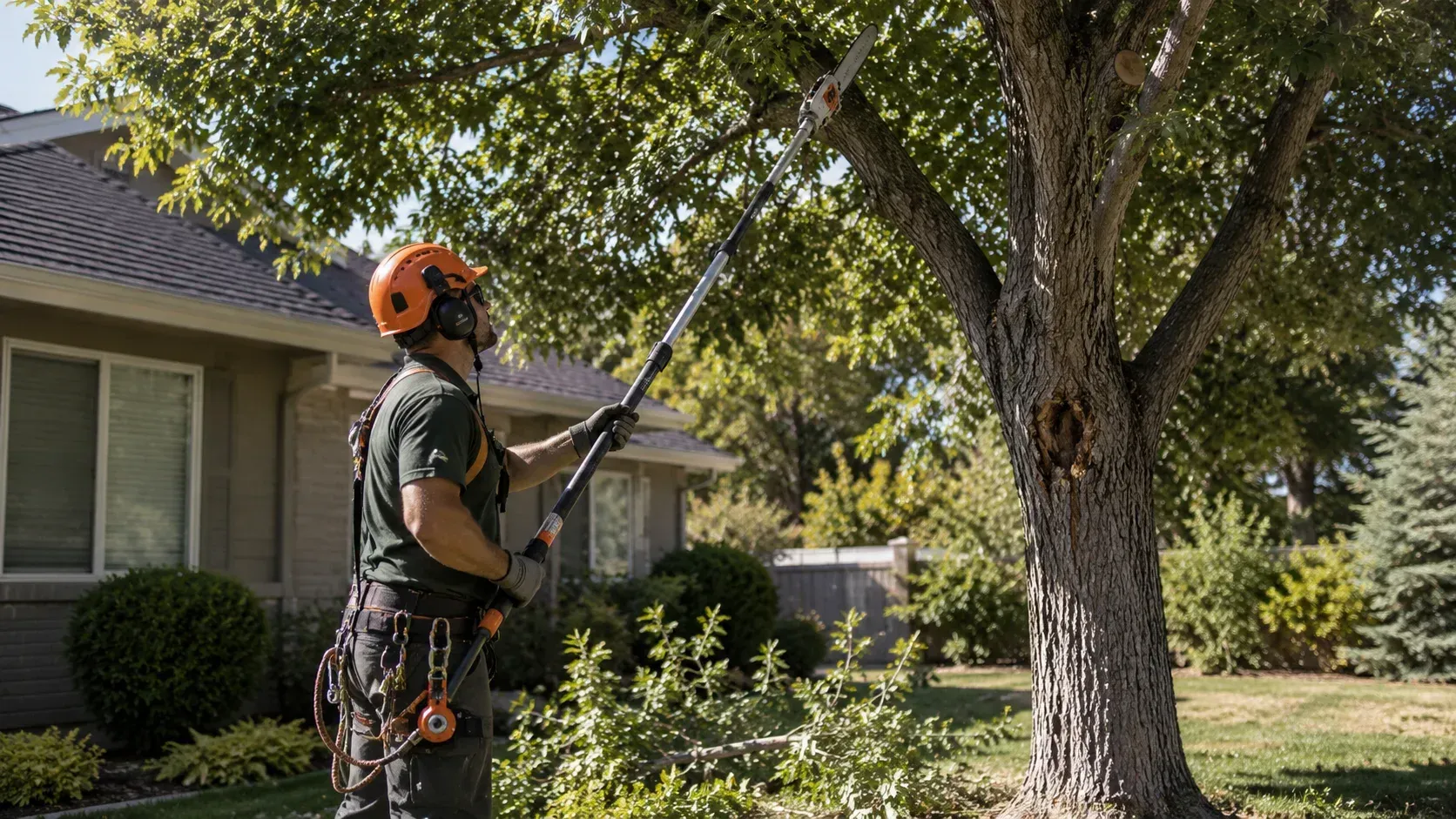
Sectional dismantling means a climber removes the tree in pieces from the top down, often lowering each piece on ropes. This is the common residential method, it is far more labor intensive, and it is what you are paying for on a tight lot.
Crane assisted removal picks sections out over a structure. Expensive to mobilize, but sometimes the safest and even the cheapest option once you account for the alternative of a full day of rigging.
Aerial lift work where the ground allows it, which can be faster and safer than climbing but needs stable access.
The relevant point for a homeowner comparing quotes is that a much lower bid may reflect a plan to fell a tree in a space that does not really accommodate felling. It is worth asking directly how they intend to take it down and where the pieces are going. Understanding the tools and techniques professionals use for removals makes it easier to tell an efficient plan from an optimistic one.
Work Near Power Lines Is a Separate Qualification
This is not an area where general tree experience substitutes.
Working near energized conductors requires specific line clearance training and equipment, and there are defined minimum approach distances that untrained workers are not permitted to cross. A capable climber who has never done line clearance work is not qualified for it, and neither is a homeowner with a pole saw.
There is also a question of whose line it is. The primary distribution lines on the poles are typically the utility's responsibility, and the utility will often handle clearance around them at no charge to you. The service drop running from the pole to your house occupies murkier territory that varies by utility. The right first call is to the utility itself, not to a tree service.
The failure mode here is electrocution, and it does not require direct contact, since electricity can arc and can travel through a wet limb. Anyone quoting work adjacent to a line should be able to describe exactly how they are handling it. The specifics of safe tree removal near power lines are worth understanding before you accept a quote that involves one.
Permits, Right of Way, and HOA Rules
Worth checking before the crew arrives rather than after.
Right of way trees. The strip between the sidewalk and the street, sometimes called the tree lawn or parkway, is frequently city property even though you mow it. Many Colorado municipalities require a permit to remove or even substantially prune trees there, and some require the work be done by a locally licensed contractor. Removing a city tree without authorization can carry a penalty.
Private property permits. Less common but not unheard of, particularly for heritage or specimen trees in some jurisdictions.
HOA approval. Covenants sometimes govern removal, replacement planting, and even species selection. Check before, not after.
Neighbor situations. If a tree sits on or near a property line, or if branches overhang, the legal picture gets complicated and varies. Talking to the neighbor before the saw arrives prevents most of these problems. A reputable company will raise this if it looks relevant.
Storm Chasers and the Post Event Doorknock
After a significant wind or hail event, out of area crews move into affected areas and work door to door. Some are legitimate contractors expanding capacity. Others are not, and the pattern is consistent enough to recognize.
Warning combination:
- Unsolicited door to door contact in the days after a storm
- Out of state plates, no local address, a cell number only, and no lettering on the trucks
- Pressure to sign immediately or claims that the price is only good today
- A large deposit demanded up front, often in cash
- An offer to handle your insurance claim, waive your deductible, or inflate the scope
- No written scope, or a contract you are asked to sign before it is filled in
The deductible waiver offer in particular is worth recognizing for what it is. It is insurance fraud, and the homeowner is a participant.
Genuine emergency work is a different thing entirely. When a limb is on a roof or a tree is against a structure, response speed has real value and emergency rates are legitimate. There is a meaningful difference between emergency tree work that prevents further damage and a stranger at your door with a chainsaw and a clipboard. The distinction is usually whether you called them.
The most useful defense is simply this: after a storm, call a company you found rather than one that found you.
Red Flags, Ranked by How Much They Should Worry You
Walk away immediately:
- No proof of insurance, or unwillingness to have a certificate sent from the agent
- Refusal to provide a written scope
- Working near power lines without line clearance qualification
- No safety equipment on the crew, meaning no helmets, no eye and hearing protection, no climbing system
- Climbing spikes used on a tree that is being pruned rather than removed
- An offer to waive your insurance deductible
Serious concern, ask more questions:
- Large upfront deposit, especially cash only
- Topping offered as a solution to tree size
- Pressure tactics or a same day expiring price
- No local address or physical presence
- An estimate produced without walking the property, on a complex job
- Vague answers about who is actually performing the work
Worth noting:
- Thin or no online presence, which matters less for long established local operators than for new companies
- Slow communication, which predicts how the job itself will go
- No discussion of the stump
- Reviews that are all recent, all identical in tone, or all from the same short window
Questions to Ask Before You Sign
- Can you have your agent send me a certificate of insurance with me as certificate holder?
- Do you carry workers compensation, and does it cover everyone who will be on my property?
- Is anyone on this job an ISA Certified Arborist, and what is that person's name?
- How do you intend to take this tree down, and where do the pieces go?
- Does the price include the stump, and to what depth?
- What happens to the wood and the chips?
- Who arranges the utility location, and how are my irrigation lines protected?
- What protection goes down for the lawn and driveway, and who fixes ruts?
- Are any permits required, and who pulls them?
- What is the deposit, and when is the balance due?
Ten questions, all answerable in a few minutes, and they surface nearly every problem that shows up later.
Conclusion
The advice to check licenses, read reviews, and get three quotes is not wrong, but it is incomplete in Colorado specifically, because there is no state license to check. That makes insurance verification and credential verification the real load bearing steps, and both are things you have to do yourself rather than take on faith.
The other half of the job is scope. Most disputes between homeowners and tree services are not about workmanship. They are about what was included: the stump, the wood, the chips, the ruts across the lawn. Quotes that look thousands of dollars apart usually reconcile once each one is broken down into the same list of items.
And on the decision itself, it is fair to remember who is making it. When the recommendation is clear, act on it. When it is a judgment call on a mature tree you would rather keep, an independent assessment costs a fraction of the removal and gives you an opinion with nothing riding on the answer.
Talk Through a Removal Before You Commit
If you are weighing a removal and want a clear picture of what the job actually involves, an on site assessment will cover the condition of the tree, how it would come down given the access and what surrounds it, whether the stump should be handled at the same time, and what the written scope would include. You can reach out to schedule a property assessment, call (970) 589-2268, or email joshua@treeclimbersservices.com with photos and a description of the site.
Frequently Asked Questions
Do you need a license to cut down trees in Colorado?
There is no statewide arborist or tree removal license in Colorado. Requirements are set at the municipal level and vary widely, so some cities require tree contractors to register locally and carry insurance while others require only a general business license. Because "licensed" carries so little weight here, verifying insurance and ISA certification matters more than it would in a state with licensing.
How do I check if a tree service is insured?
Ask them to have their insurance agent send you a certificate of insurance directly, with your name listed as certificate holder. Do not rely on a copy the contractor hands you, since certificates are easy to alter and often keep circulating after a policy lapses. Check the expiration date, confirm the policy actually covers tree work rather than general landscaping, and ask separately about workers compensation.
What is the difference between an arborist and a tree service?
An arborist is a credentialed individual trained in tree biology, assessment, and care. A tree service is a company, and it may or may not employ one. A company can reference arborist involvement while sending a crew with no certification, so ask for the specific person's name and verify their ISA certification in the public directory.
Do I need a permit to remove a tree in Colorado?
It depends on the city and on where the tree is. Trees in the right of way, meaning the strip between the sidewalk and the street, are frequently city property, and many municipalities require a permit and a locally licensed contractor to work on them. Trees fully on private property require a permit less often, but some jurisdictions regulate specimen or heritage trees. Check with your city, and check your HOA covenants separately.
Why are tree removal quotes so different?
Usually because they describe different work. One bid may include stump grinding, hauling all wood and chips off site, and lawn protection, while another leaves the wood in rounds, leaves the stump, and leaves the ruts. Method matters too, since felling a tree into an open area is far cheaper than dismantling it in sections over a roof. Break each quote into the same line items and the gap normally explains itself.
Related Posts