How Snow Removal Helps Protect Your Driveway and Sidewalk from Long-Term Damage
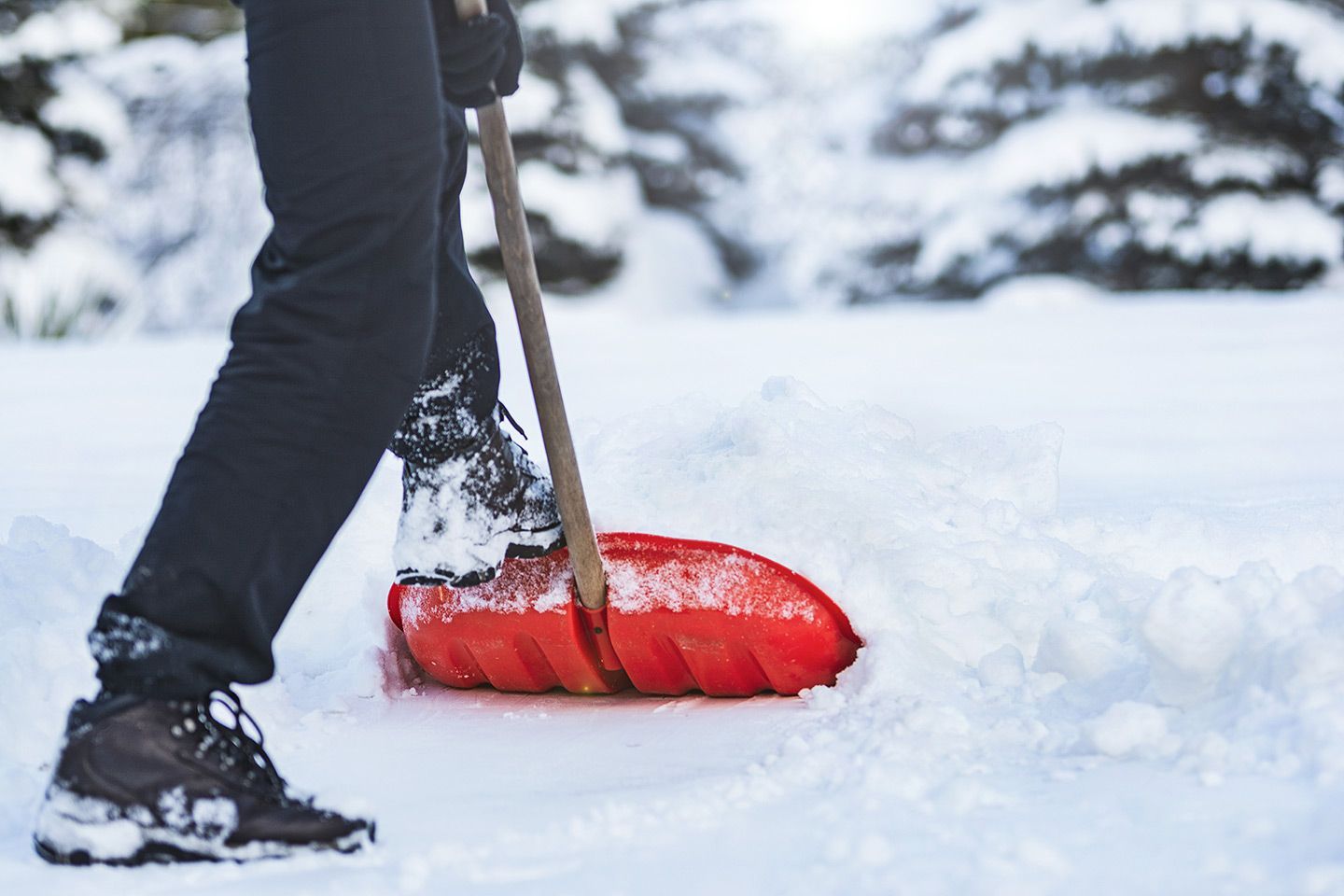
Table of Contents
- Introduction
- The Damage Is Caused by Water, Not Snow
- Why Grand Junction Is Harder on Concrete Than Snowier Places
- What Deicers Actually Do, and What They Do Not
- Choosing a Deicer by Temperature
- The New Concrete Rule Almost Everyone Breaks
- Anti-Icing Beats De-Icing
- Where You Pile the Snow Matters More Than You Think
- Tools That Damage Pavement and Tools That Do Not
- Drainage Is the Underlying Problem
- Sidewalks, Ordinances, and Liability
- Snow, Ice, and the Trees Next to Your Driveway
- What to Do Before Winter and What to Do in Spring
- When Doing It Yourself Stops Making Sense
- Conclusion
- Get Snow Removal on the Calendar Before It Snows
- Frequently Asked Questions
Key Takeaways
- Snow does not damage concrete. Meltwater that soaks in and then freezes does, and deicers make the damage worse by increasing how often that cycle happens.
- Rock salt stops working around 15 to 20 degrees. Applying more of it below that temperature accomplishes nothing except leaving residue on the surface and in the soil.
- Deicers are not meant to melt an entire slab. They break the bond between ice and pavement so it can be scraped off, which means shoveling after application, not instead of it.
- Concrete poured within the last year should get no deicer at all. First winter deicer use is a leading cause of surface scaling on new driveways.
- Treating before a storm uses far less material than treating after, and prevents ice from bonding in the first place.
- Where you pile snow determines where meltwater goes. Piles against the garage, over tree roots, or uphill of the driveway create their own problems.
- Sand provides traction but melts nothing, and it needs sweeping up in spring before it reaches drains.
Introduction
Snow itself does almost no damage to a driveway. The damage comes from meltwater soaking into the surface and then freezing inside it, and from deicing products that increase how often that cycle repeats. That is why how and when you clear snow matters considerably more than how quickly you get it off.
This reframing changes the advice. If snow were the problem, the answer would be to remove it faster. Since saturation and freeze cycles are the problem, the answer involves where you put the snow, what you apply and at what temperature, whether water can drain away, and whether the concrete is old enough to tolerate any of it.
Local conditions make this worth getting right. The Grand Valley gets less snow than most of Colorado, which leads people to assume driveways here take less abuse. The opposite is closer to true, because what actually breaks concrete is the number of freeze and thaw cycles, and wide daily temperature swings with strong sun produce a lot of them from very little snow. Property owners who would rather not manage it themselves can hand it off through snow removal service, but the principles below apply either way.
The Damage Is Caused by Water, Not Snow
Concrete and asphalt are porous. Water gets into the pore structure and into any existing crack.
When that water freezes it expands by roughly nine percent. Confined inside the material, that expansion creates internal pressure. One cycle does nothing noticeable. Repeated dozens of times across a winter, on a surface that stays saturated, it fractures the material from the inside.
Two failure patterns result:
Scaling is the surface flaking or peeling away, exposing the aggregate underneath. It usually indicates that the top layer was saturated and cycled repeatedly, and it is the classic deicer related failure.
Cracking and spalling happen where water has collected in an existing crack, joint, or low spot and cycled there. Cracks widen from the inside, edges break away, and eventually you get potholes.
The important consequence: anything that keeps the surface wetter for longer, or increases the number of freeze cycles, accelerates the damage. That includes poor drainage, snow piled where it melts back onto the slab, and deicers that create liquid water at temperatures where the surface would otherwise have stayed frozen solid.
Why Grand Junction Is Harder on Concrete Than Snowier Places
This is counterintuitive and worth understanding, because it changes priorities.
A place with heavy sustained snowfall and consistently cold temperatures may put a driveway through relatively few freeze and thaw cycles. The surface freezes in November and largely stays frozen. Frozen concrete is not cycling.
The Grand Valley works the opposite way. Snowfall is comparatively modest, but daily temperature swings are wide and winter sun at this elevation is intense. A south facing driveway can be above freezing and wet at two in the afternoon and well below freezing by nine that night. That is a full cycle in a single day, repeated through much of the winter.
Practical implications:
- South and west facing surfaces cycle the most. They also look the cleanest, since the sun clears them, which is why the damage seems to come from nowhere.
- North facing strips and shaded areas behave differently. They stay iced for long stretches and hold meltwater running off the sunny sections. Persistent ice on a shaded sidewalk next to a bare driveway is normal here.
- Meltwater from a sunny section that refreezes on a shaded section is the single most common source of hidden ice on residential property.
- Total snowfall is a poor predictor of driveway wear. Cycle count is the number that matters.
What Deicers Actually Do, and What They Do Not
Most homeowners use these products incorrectly, and the reason is a misunderstanding of the mechanism.
Deicers do not melt ice on their own. They lower the freezing point of water. To do anything at all, they need some liquid water present to dissolve into, and they need the temperature to be above the product's effective range. Below that range they sit on the surface inert.
Deicers are not meant to melt the whole slab. The intended use is to break the bond between the ice and the pavement so the ice can be scraped or shoveled off. Applying product and walking away is the wrong sequence. Apply, give it time to undercut the ice, then remove the ice mechanically.
More is not better. Over application does not speed things up. It wastes product, leaves residue that tracks indoors, damages adjacent soil and plants, and increases the saturation that harms the concrete.
How deicers actually damage concrete is mostly physical rather than chemical. By creating liquid water at temperatures where the surface would have stayed frozen, they increase the number of freeze and thaw cycles and keep the concrete more saturated. That is the primary mechanism behind scaling.
Two exceptions worth knowing:
- Never use ammonium based fertilizers as deicers. Ammonium sulfate and ammonium nitrate chemically attack cement paste. They are occasionally suggested as a homemade substitute. Do not.
- "Pet safe" and "environmentally friendly" are largely marketing terms. Many products carrying those labels are still chloride salts or urea. Read the actual active ingredient rather than the front of the bag.
Sand is not a deicer. It melts nothing. It provides traction, which is genuinely useful on ice you cannot remove, especially at temperatures too low for any product to work. It also needs sweeping up in spring before it washes into drains.
Choosing a Deicer by Temperature
This is the single most useful thing to know, and the original advice to "use salt sparingly" does not capture it. Products have different effective temperature ranges, and using the wrong one in cold weather means applying material that does nothing.
Approximate practical working ranges, recognizing that blends vary and manufacturer claims are usually optimistic:
Sodium chloride, meaning ordinary rock salt. Effective down to roughly 15 to 20 degrees. Cheapest and most widely available. Corrosive to metal, damaging to soil and plants, and useless in genuinely cold conditions.
Magnesium chloride. Effective to roughly zero degrees. Generally considered less harsh on vegetation than sodium chloride, though it is still a salt and still accumulates in soil.
Calcium chloride. Effective to roughly twenty below. Releases heat as it dissolves, which is why it works fastest in cold conditions. Also the most aggressive on vegetation and hard on skin and leather.
Potassium chloride. Only useful above roughly 25 degrees. Marketed as gentler, but its poor cold performance limits it.
Calcium magnesium acetate, or CMA. The gentlest option on concrete and plants, and the usual recommendation for newer concrete when something must be used. Expensive, and it works slowly and only in milder conditions, above roughly 20 degrees.
Urea. Poor performance, effective only above roughly 25 degrees, and it adds nitrogen to runoff. Often sold as pet friendly. Rarely the right choice.
The practical approach for most residential properties: check the actual pavement temperature rather than the forecast high, choose a product rated for it, apply the minimum that breaks the bond, and use sand for traction when it is simply too cold for any of them to work.
The New Concrete Rule Almost Everyone Breaks
If your driveway, sidewalk, or patio was poured within the last year, apply no deicer to it at all through its first winter.
New concrete has not fully developed the internal air void structure and surface strength that let it tolerate freeze cycles. Deicer applied during that first season is a leading cause of surface scaling, and the resulting damage is permnent and cosmetic in the worst way, since it exposes aggregate across the whole surface.
For a first winter slab:
- Shovel promptly and thoroughly so ice has less opportunity to form
- Use sand for traction where footing matters
- Keep meltwater and drainage off the new surface as much as possible
- Ask the contractor whether a penetrating sealer is appropriate and when it can be applied, since timing matters
This also applies to concrete that has been resurfaced or patched recently. Contractors typically mention it once at handover, and a year later nobody remembers.
Anti-Icing Beats De-Icing
This is the practice that separates professional operations from homeowner routine, and it is easy to adopt.
Anti-icing means treating the surface before the snow arrives. A light application of the appropriate product creates a layer that prevents snow and ice from bonding to the pavement. When you then clear the snow, it comes up cleanly instead of leaving a welded sheet behind.
De-icing means treating after ice has already formed and bonded. It requires substantially more material, takes longer, and is less effective.
The savings are real in both material and effort. Less product on the ground also means less salt in the soil beside the driveway and less residue tracked into the house.
The one caution is timing. Applying too early before a rain event, or before a storm that starts as rain, simply washes the product away. Applying shortly ahead of a snow event that will start and stay as snow is where it works.
Where You Pile the Snow Matters More Than You Think
Barely anyone thinks about this, and it determines where all that water goes when it melts.
Do not pile snow against the house or garage. Melting snow against a foundation drives water where you least want it, and against a garage door it refreezes and can damage the seal and the panel.
Do not pile uphill of the driveway. Meltwater runs back across the surface during the day and refreezes at night. You end up re-icing the area you just cleared, every single day, which is exactly the cycle count problem described earlier.
Keep piles off the storm drain and off the sidewalk. Blocking a drain means meltwater has nowhere to go and pools where it will freeze.
Do not pile salted snow onto lawn, planting beds, or around tree bases. This is the one people miss entirely. Snow cleared from a treated driveway carries all that salt with it. Dumped repeatedly in the same spot, it concentrates sodium in the soil, which damages root systems, degrades soil structure, and shows up as dead turf strips and browning evergreens in spring.
Watch where the piles shade. A large pile shading a section of driveway keeps it wet and cycling long after the rest has dried.
Give yourself room for the next storm. Piling everything at the driveway entrance works until the second snowfall.
The general principle: pile snow downhill of the surfaces you care about, away from structures and root zones, where meltwater can drain away rather than back across pavement.
Tools That Damage Pavement and Tools That Do Not
Shovels. Plastic or poly blades, ideally with a replaceable wear strip. Steel blades and steel edges gouge concrete, chip control joints, and tear up asphalt, which is soft in warm weather and brittle in cold. On stamped, colored, or exposed aggregate concrete, this matters even more.
Ice chippers and picks. Use with restraint. Chipping at bonded ice with a steel bar damages the surface underneath. This is what deicer is for, applied properly and given time.
Snow blowers. Set the skid shoes so the auger housing rides slightly above the surface rather than scraping it. Running the auger directly on concrete chews the surface and destroys the machine. On a new or decorative slab, raise the clearance further.
Plows. Fine for driveways when the operator knows the surface, uses appropriate edge material, and knows where the control joints and any raised features are. This is a genuine argument for consistency in whoever does the work, since someone who has plowed your driveway before knows where the edges are under the snow.
Whatever you use, clear to the pavement where practical. A compacted layer left behind becomes ice, holds moisture against the surface, and is much harder to remove later.
Drainage Is the Underlying Problem
Most driveways that fail early have a water problem that predates the snow.
Downspouts discharging onto the driveway produce an ice sheet every time it thaws and refreezes. Extend them so they discharge onto soil away from pavement.
Low spots hold water, and standing water freezes and cycles in place. These are the areas that develop potholes first.
Snow berms along the edges can trap meltwater on the slab rather than letting it run off. Clearing a path to the low edge is worth the extra minute.
Existing cracks and open control joints let water into the sub base, where it freezes and lifts. Sealing cracks and joints in autumn, before winter, is inexpensive and directly reduces damage.
Failed sub base is the deeper version of the problem, where water has washed out material under the slab. That shows up as sinking or rocking sections and is a repair rather than a maintenance item.
If a driveway has damage concentrated in one spot every year, the cause is almost always drainage rather than snow removal technique.
Sidewalks, Ordinances, and Liability
Public sidewalks come with obligations most homeowners are vaguely aware of and few have actually checked.
Many Colorado municipalities require the adjacent property owner to clear public sidewalks within a set number of hours after snowfall ends, with fines for noncompliance. The specific window and the enforcement approach vary by city, so it is worth looking up your own municipal code rather than assuming.
Beyond the ordinance, there is the injury question. A fall on an icy walk in front of a property tends to raise questions about whether it was cleared, when, and how consistently. Partial or intermittent clearing can create its own complications, since a walk cleared unevenly can be more hazardous than one left uniformly snow covered. The relationship between snow clearing and slip and fall exposure is worth understanding for anyone who owns rental property or a commercial site in particular.
Practical points that reduce both risk and hassle:
- Clear the full width, not a narrow track, since a narrow path forces people onto ice at the edges
- Pay attention to the areas that ice after the rest is clear: shaded strips, the bottom of a sloped approach, the transition at the curb ramp, and anywhere meltwater crosses
- Keep sand or traction material accessible for conditions too cold for deicer
- Illuminate walkways, since most winter falls happen when someone cannot see the ice
- Check again in the evening, because the surface that was clear at noon may not be at six
Snow, Ice, and the Trees Next to Your Driveway
Worth including, because snow management and the plants around the pavement interact in ways that surprise people.
Salt laden snow is a soil problem. Repeatedly dumping treated snow in the same bed or at the same tree base concentrates sodium where roots are. The symptoms appear the following season as marginal leaf scorch, thinning canopies, dead turf strips along driveway edges, and browning on the driveway side of evergreens. The fix is where you pile it, not what you do afterward.
Untreated snow over a root zone is generally fine, and can be beneficial, since it insulates soil and adds moisture when it melts.
Do not knock ice off branches. Ice loaded limbs are brittle, and striking or shaking them causes the breakage you are trying to prevent. Let ice melt off on its own.
Snow can be removed from branches gently, using upward sweeping motions from beneath rather than downward blows, and only when it is snow rather than ice.
Heavy wet snow on shrubs beside walkways bends them into the path and eventually splits them. Loosely tying up multi stem upright shrubs in late autumn prevents this.
Damaged limbs should wait for a proper cut. A limb broken under snow load leaves a ragged wound that will not seal well. Cleaning it up correctly once conditions allow limits decay entry.
What to Do Before Winter and What to Do in Spring
Autumn, before the first snow:
- Seal cracks and open joints in concrete and asphalt
- Extend downspouts so they discharge away from pavement
- Note where water pools and plan snow piles accordingly
- Mark driveway edges, sprinkler heads, and low walls with stakes so nobody plows or blows through them
- Buy the deicer you actually need before the shelves are picked over, and buy sand too
- Tie up upright shrubs along walkways
- Confirm the driveway is more than a year old before planning any deicer use
Spring, after the last thaw:
- Sweep and remove leftover sand before it reaches drains
- Rinse salt residue off concrete and off the soil beside heavily treated areas
- Water beds and tree root zones near treated pavement thoroughly to help flush accumulated salts
- Inspect for new scaling, cracking, and edge damage while it is small
- Look for turf and shrub damage along driveway edges, which tells you where snow piles went wrong
- Reseal if the surface has reached the point where sealing is appropriate for its type
When Doing It Yourself Stops Making Sense
Handling it yourself is reasonable for many properties. A few situations change the math:
- A steep or long driveway, where clearing is slow and refreeze is a constant issue
- Health considerations, since snow shoveling is strenuous and is well documented as a cardiac risk for people who are not conditioned for it
- Rental or commercial property, where clearing obligations and liability exposure make consistency more important than convenience
- Travel during winter, since an ordinance clock does not pause because you are away
- A property where the surfaces are new or decorative and technique genuinely matters
- Timing that does not fit your schedule, since the useful window is often early morning before anyone drives over the snow and compacts it
The decision usually comes down to consistency rather than capability. Snow removal only works if it happens every time, promptly, and there are reasonable indicators for when hiring it out makes sense rather than treating each storm as a separate decision.
Conclusion
The mental shift that makes everything else fall into place is this: snow is not what damages a driveway. Water in the surface, freezing and thawing repeatedly, is what damages it. Everything useful follows from that.
Clear promptly so ice has less chance to bond and so compacted layers do not hold moisture on the surface. Pile snow downhill, away from the house and away from tree roots and beds, so meltwater drains rather than crossing the slab again. Match the deicer to the actual pavement temperature, apply the minimum that breaks the bond, then shovel. Use sand when it is too cold for anything to work. Fix the drainage that is quietly causing the damage in one particular spot every year.
And if the concrete went in within the last year, keep every deicer off it entirely and use sand instead. That one restriction prevents the most common and most visible driveway failure there is.
Get Snow Removal on the Calendar Before It Snows
If you would rather not manage clearing, timing, and deicer decisions through the winter, arranging service ahead of the season means the work happens on a schedule rather than after you have already driven over the snow twice. It is worth sorting out before the first storm, since booking timing affects availability once the weather turns. You can set up snow removal for your property, call (970) 589-2268, or email joshua@treeclimbersservices.com.
Frequently Asked Questions
Does salt damage concrete driveways?
Indirectly, yes. Rock salt does not chemically attack cured concrete, but it creates liquid water at temperatures the surface would otherwise stay frozen, increasing freeze and thaw cycles and saturation. That is what causes surface scaling.
What is the best ice melt for concrete?
Calcium magnesium acetate is gentlest on concrete but works only above roughly 20 degrees. Magnesium chloride is a reasonable middle option. Match the product to the actual pavement temperature, since rock salt does little below about 15 degrees.
How soon should you shovel after it snows?
Before anyone walks or drives on it, ideally. Compacted snow bonds to the surface, turns to ice, and is far harder to remove. Clearing the bare pavement early also means less deicer is needed later.
Can you put ice melt on a new concrete driveway?
No. Concrete poured within the last year should get no deicer at all, since its surface strength and air void structure are still developing. Use sand for traction instead and shovel thoroughly.
Where should you pile snow from your driveway?
Downhill of the driveway, away from the house and garage, off the storm drain, and away from tree bases and planting beds. Salted snow dumped repeatedly in one spot concentrates sodium in the soil and damages roots.
Related Posts