How Tree Cabling and Bracing Protect Trees and Property from Storm Damage
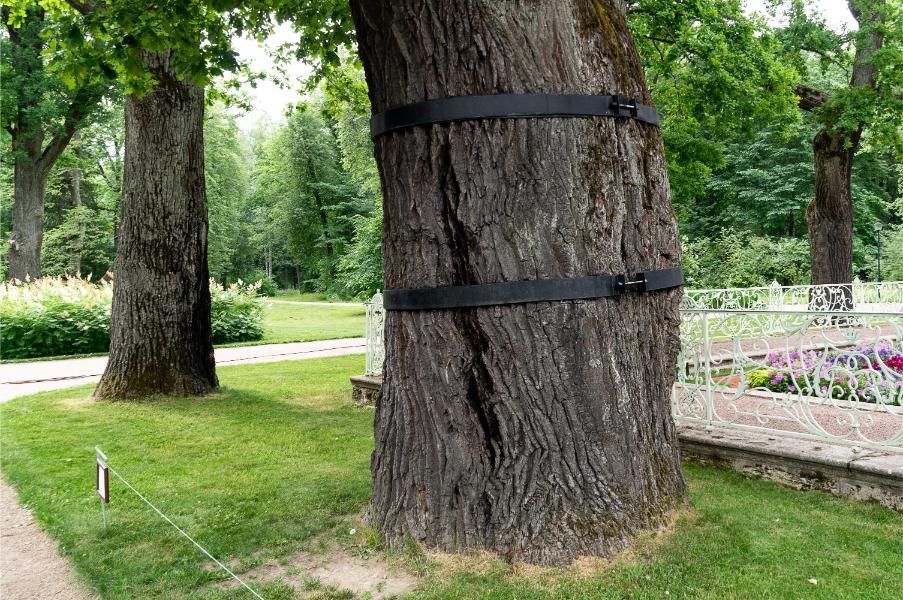
Table of Contents
- Introduction
- What Are Tree Cabling and Bracing?
- When Should a Tree Be Cabled or Braced?
- What Tree Cabling and Bracing Can and Cannot Prevent
- When Pruning May Be Better Than Cabling
- When Tree Support Is Not Enough
- What Professional Installation Involves
- Tree Cabling and Bracing Considerations in Grand Junction, CO
- How to Maintain a Supported Tree
- Conclusion
- Need a Professional Tree Assessment?
- Frequently Asked Questions
Key Takeaways
- Tree cabling and bracing are structural support methods for trees with specific weaknesses, such as included unions, co-dominant stems, cracks, or heavy limbs.
- Cabling is intended to reduce stress at vulnerable areas rather than stop a tree from moving completely.
- Not every structurally weak tree is a good candidate for support; decay, tree health, defect severity, and the potential target area all matter.
- Pruning can sometimes address a structural or storm-risk problem more effectively than adding hardware.
- Severely compromised trees may require removal rather than structural support.
- Cabling and bracing require professional installation and periodic inspection because the tree continues to grow and change around the hardware.
- In Grand Junction, wind, winter weather, mature shade trees, and the proximity of trees to homes and other structures can all affect how storm risk should be evaluated.
Introduction
Tree cabling and bracing can reduce the risk of structural failure by supporting weak branch unions, co-dominant stems, cracked areas, or heavy limbs before storm forces place additional stress on them.
For property owners in Grand Junction, CO, the decision is not simply whether a tree can be supported. The more important question is whether structural support is the right solution for that particular tree. A healthy mature tree with one localized weakness may benefit from support, while a tree with extensive decay or severe structural failure may present a risk that cabling cannot reasonably correct.
That assessment should come before the hardware. Professional tree care may also involve selective pruning or removal of hazardous limbs depending on what the inspection reveals. Tree Climbers Services provides professional tree trimming and pruning for trees that need structural, safety, or maintenance work.
Understanding what cabling and bracing actually do and where their limitations begin can help homeowners make a better decision before the next major storm.
What Are Tree Cabling and Bracing?
Tree cabling and bracing are different types of structural support, although they are sometimes used together.
Tree Cabling
Cabling generally involves connecting selected limbs or stems with high-strength support hardware. The purpose is to help manage movement and loading around a weak structural point.
A cable does not turn a tree into a rigid structure. Trees need to move naturally in the wind. The objective is instead to reduce excessive movement or redistribute forces around a vulnerable area.
Cabling can be considered when two major stems have a weak relationship, a large limb places unusual leverage on a branch union, or a structural defect creates a concern that can potentially be managed without removing the tree.
Tree Bracing
Bracing typically uses rigid hardware, such as rods, to provide additional support across a crack, weak union, or other structural defect.
Unlike a cable that works between parts of the canopy, a brace can provide direct reinforcement through or across a compromised area.
The exact hardware and placement should depend on the tree rather than a standard installation formula. Species, stem diameter, defect location, canopy structure, tree condition, and nearby targets all affect the appropriate approach.
When Should a Tree Be Cabled or Braced?
Cabling and bracing make the most sense when there is a specific structural problem that can reasonably be supported.
Co-Dominant Stems
Trees with two or more major stems emerging from a similar point can develop structural weaknesses, particularly when the union is narrow or has poor attachment characteristics.
The concern is not simply that the tree has multiple trunks. The condition of the union and how the stems are connected are more important.
Weak or Included Branch Unions
A narrow union can create a location where bark becomes trapped between stems rather than allowing the wood to form a strong connection.
These areas deserve closer inspection because they can become failure points as the stems grow and move.
For more information about why cracks and splits develop, see what causes a split tree trunk.
Heavy or Overextended Limbs
A large horizontal limb can place substantial leverage on its attachment point, particularly when the limb extends over a house, driveway, patio, or other frequently occupied area.
Support may be one option, but the inspection should also consider whether reducing the limb's weight through appropriate pruning would provide a better long-term solution.
Existing Cracks or Structural Defects
A visible crack should not automatically lead to cabling or bracing.
The important questions are:
- Where is the crack located?
- Is it actively separating?
- Is there evidence of decay?
- How much of the tree is affected?
- What is underneath or beside the potential failure area?
- Is the tree healthy enough to justify preservation?
A crack over a target such as a house or driveway deserves prompt professional evaluation.
What Tree Cabling and Bracing Can and Cannot Prevent
One of the biggest misunderstandings about tree support is that installing a cable makes a tree storm-proof.
It does not.
What Support Can Do
A properly designed system can help manage forces at a known structural weakness. Depending on the situation, support may:
- Reduce movement between supported stems
- Help distribute mechanical loads
- Stabilize a weak union
- Reduce the likelihood of separation at a specific defect
- Help preserve a structurally compromised but otherwise viable tree
- Reduce the potential for certain failures over nearby property
The goal is risk reduction, not a guarantee that the tree will survive every storm.
What Support Cannot Do
Cabling and bracing cannot correct every underlying tree problem.
A support system cannot reliably compensate for a tree that has extensive decay, severe root failure, widespread structural defects, or advanced decline. Extreme wind, heavy snow loading, lightning, or other severe events can also produce forces beyond what a support system was intended to manage.
This is why a cable should never be viewed as a substitute for assessing the entire tree.
When Pruning May Be Better Than Cabling
Cabling is not automatically the best answer whenever a tree has a heavy or poorly positioned limb.
Sometimes the more appropriate first step is pruning.
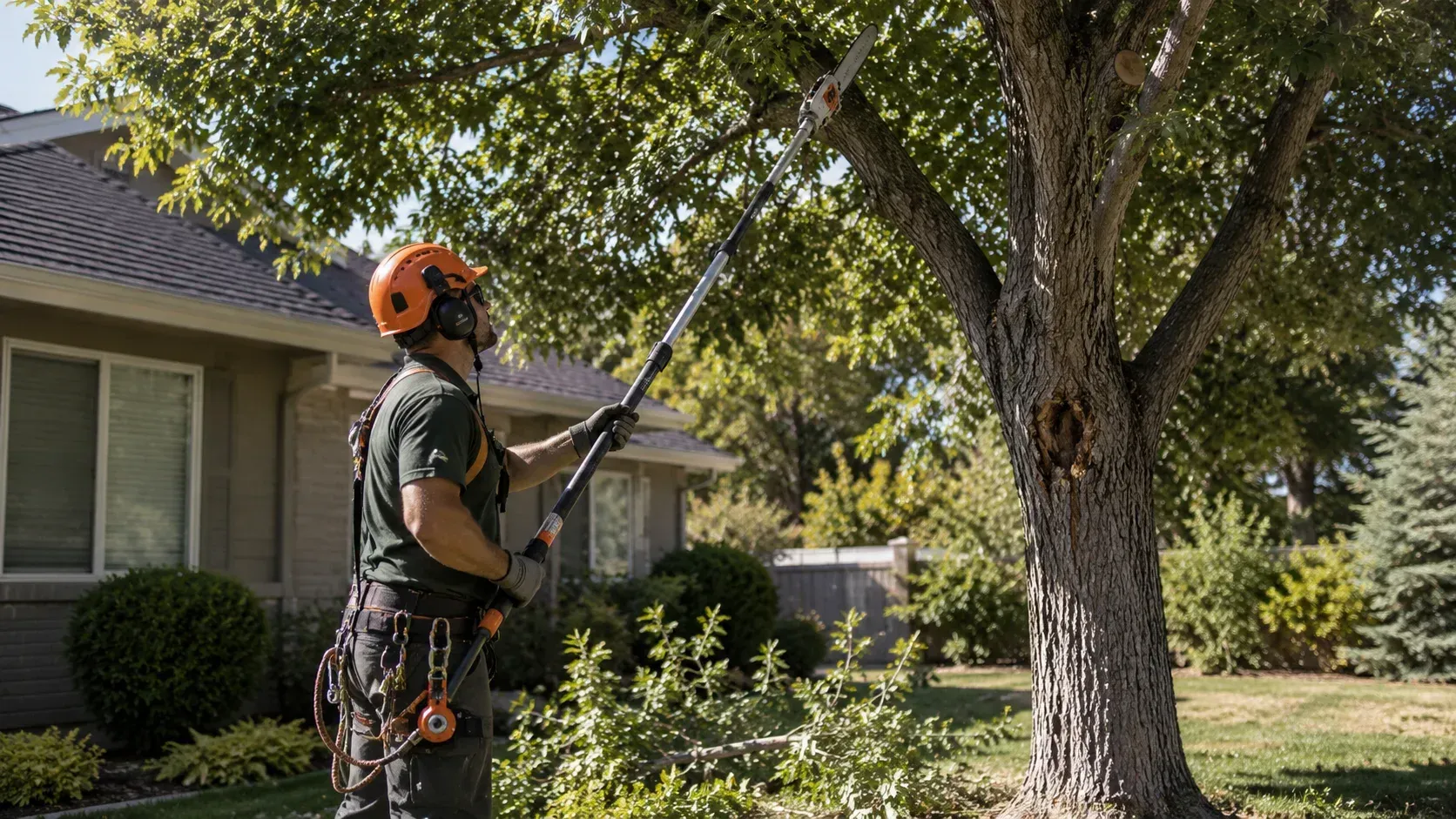
For example, if a structurally sound tree has dead, damaged, overextended, or poorly positioned branches, selective pruning may reduce unnecessary weight and improve the tree's overall structure.
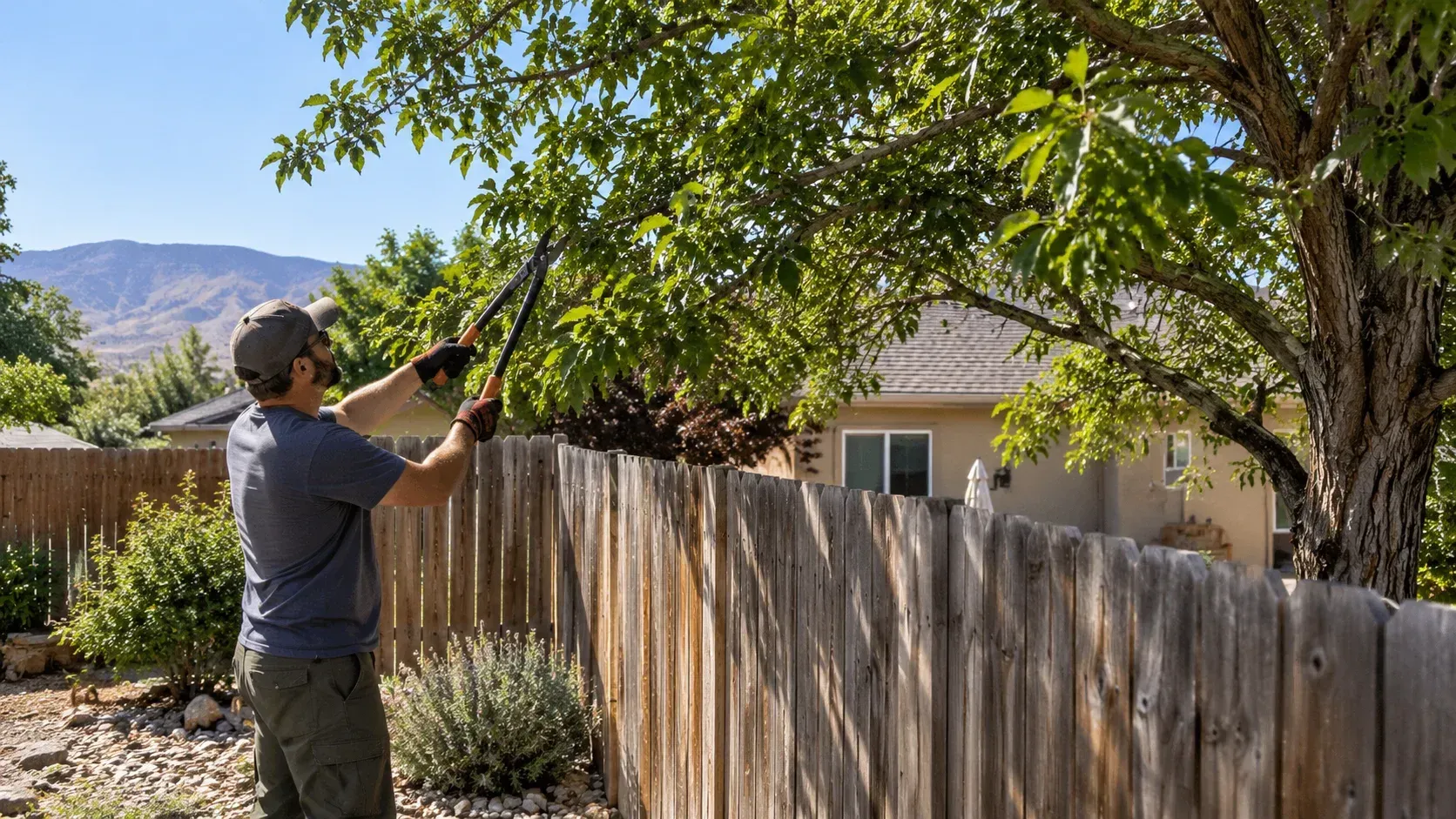
Tree trimming can also address hazardous limbs that are already creating a direct risk to buildings, vehicles, walkways, or other areas.
The important distinction is that pruning changes the tree's structure, while cabling supports an existing structure. In some situations, one approach is appropriate; in others, they may be considered together.
Over-pruning, however, is not a solution. Removing too much live canopy can create additional problems rather than making the tree stronger.
A professional assessment should determine what needs to be removed, what should remain, and whether structural support is justified.
When Tree Support Is Not Enough
There are situations where attempting to preserve a tree with cables or braces may not be the safest choice.
Extensive Decay
If significant decay has compromised the wood that needs to carry the load, hardware cannot restore the lost structural material.
Severe Splitting
A major split that is progressing through a critical portion of the trunk or main union may represent a failure risk that requires more than reinforcement.
Major Root Problems
A tree can have a seemingly strong trunk and still be unstable if its root system has been seriously compromised.
Widespread Decline
If the tree is severely declining or has multiple major defects, installing a support system may only address one part of a much larger problem.
High-Risk Location
The same structural defect can have very different consequences depending on what lies beneath the tree.
A weak limb over an unused portion of a yard is not the same risk as a weak limb directly over a home, occupied patio, driveway, or regularly used walkway.
When a tree is too hazardous to preserve, professional tree removal services may be a more appropriate option than attempting to support an unstable structure.
What Professional Installation Involves
Tree support should be designed around the tree rather than installed according to a one-size-fits-all pattern.
1. Inspect the Entire Tree
The evaluation should look beyond the obvious crack or weak branch.
Important areas include:
- Major branch unions
- Trunk condition
- Canopy distribution
- Signs of decay
- Dead or damaged limbs
- Root flare and surrounding ground
- Lean and overall stability
- Nearby structures and other targets
The purpose is to understand the cause and extent of the structural concern.
2. Determine Whether Support Is Appropriate
A professional should compare several possible responses rather than assuming cabling is necessary.
Depending on the situation, the options may include:
- Monitoring
- Selective pruning
- Cabling
- Bracing
- A combination of pruning and support
- Removal of a hazardous section
- Complete tree removal
This decision is where professional judgment provides the most value.
3. Design the Support System
If cabling or bracing is appropriate, hardware placement should account for the location of the defect and the way the tree is expected to respond to movement.
Improperly placed hardware can fail to address the original problem or introduce unnecessary stress.
4. Install the Hardware Safely
Working in a mature tree involves fall hazards, specialized equipment, cutting tools, and heavy hardware.
Installation should therefore be performed by trained professionals rather than treated as a typical homeowner maintenance project.
5. Plan for Future Inspections
A support system is not a permanent, maintenance-free installation.
The tree continues to grow. Branches become larger, hardware can change relative to the growing wood, and the original structural condition may also change.
That means the system should be inspected periodically rather than forgotten after installation.
Tree Cabling and Bracing Considerations in Grand Junction, CO
Grand Junction property owners have to consider the local environment when evaluating mature trees.
The Western Colorado climate can expose trees to periods of strong wind, winter weather, temperature changes, and seasonal stress. Mature trees in established residential and commercial landscapes may also have large canopies positioned close to buildings, driveways, fences, and other structures.
That combination makes location and tree condition particularly important.
A mature shade tree should not automatically be considered hazardous simply because it is large. Likewise, a tree with a visible defect should not automatically be removed.
A better approach is to determine:
- What structural defect exists?
- How serious is the defect?
- Is the tree otherwise healthy?
- What could be damaged if a failure occurred?
- Can pruning reduce the load?
- Can cabling or bracing reasonably reduce the risk?
- Would removal provide a safer solution?
Tree Climbers Services serves Grand Junction and nearby communities including Fruita, Clifton, Orchard Mesa, and Palisade, with tree trimming, tree removal, stump removal, and other tree-care services.
How to Maintain a Supported Tree
Installing a support system is only the beginning.
Property owners should watch for changes such as:
- New cracks around an existing defect
- Movement or separation between supported stems
- Dead or declining branches
- Changes in the canopy
- Damage after severe weather
- Hardware that appears loose, displaced, or damaged
- New growth that changes the relationship between the tree and hardware
Do not attempt to tighten, reposition, or modify structural hardware yourself unless specifically instructed by a qualified professional.
After a major storm, the tree should also be reassessed if there are new cracks, hanging limbs, broken branches, or other obvious changes.
Preventive maintenance can be valuable because structural problems are easier to evaluate before a failure occurs. Our preventive tree care and early maintenance provides additional context on taking a proactive approach to tree health and property safety.
Conclusion
Tree cabling and bracing can be useful tools for managing specific structural weaknesses, but they are not universal solutions for storm damage. The best candidates are generally trees with identifiable structural problems that remain sufficiently healthy and stable to justify preservation.
The most important decision is therefore not simply whether to install a cable. It is determining what is causing the structural weakness and which treatment addresses that problem most appropriately.
For some trees, that may mean selective pruning. For others, cabling or bracing may provide additional support. If decay, severe splitting, root problems, or overall instability make preservation unsafe, removal may be the better choice.
In Grand Junction, where mature trees can be exposed to seasonal wind and winter conditions while growing close to homes and other property, having a structural concern evaluated before the next major storm can help property owners make a more informed decision.
Need a Professional Tree Assessment?
If you have noticed a split trunk, weak branch union, co-dominant stems, or a large limb hanging over your home or driveway, a professional assessment can help determine whether pruning, cabling, bracing, monitoring, or removal is the appropriate next step.
Contact Tree Climbers Services to discuss the condition of your tree and the options available for your property. The company currently lists service for Grand Junction and surrounding Western Colorado communities and provides tree-care consultations and estimates.
Frequently Asked Questions
Does tree cabling prevent storm damage?
No. Cabling can reduce stress at specific structural weaknesses, but it cannot guarantee that a tree or supported limb will not fail during severe weather. The condition of the tree and the severity of the storm both affect the outcome.
Is cabling better than pruning for a weak tree?
Not necessarily. Pruning may be more appropriate when removing a specific hazardous or overextended limb can reduce structural stress. Cabling may be considered when the tree has a structural weakness that can be supported without removing the affected portion.
Can a tree with a split trunk be saved with bracing?
Sometimes, but not every split trunk is a good candidate for bracing. The location and severity of the split, the presence of decay, the tree's overall health, and the potential consequences of failure all need to be evaluated first.
How often should a cabled or braced tree be inspected?
There is no single inspection interval that applies to every tree. The system should be checked periodically because both the hardware and the tree can change over time. Additional inspection is appropriate after significant storms or when new cracks, movement, or hardware problems become visible.
Can homeowners install tree cables themselves?
DIY installation is not recommended for structural tree support. Installation may require climbing, specialized equipment, knowledge of tree structure, and careful hardware placement. Incorrect installation can fail to address the hazard or create additional problems for the tree and surrounding property.
Related Posts