How Much Water Do Mature Trees Need During Grand Junction's Hot, Dry Summers?
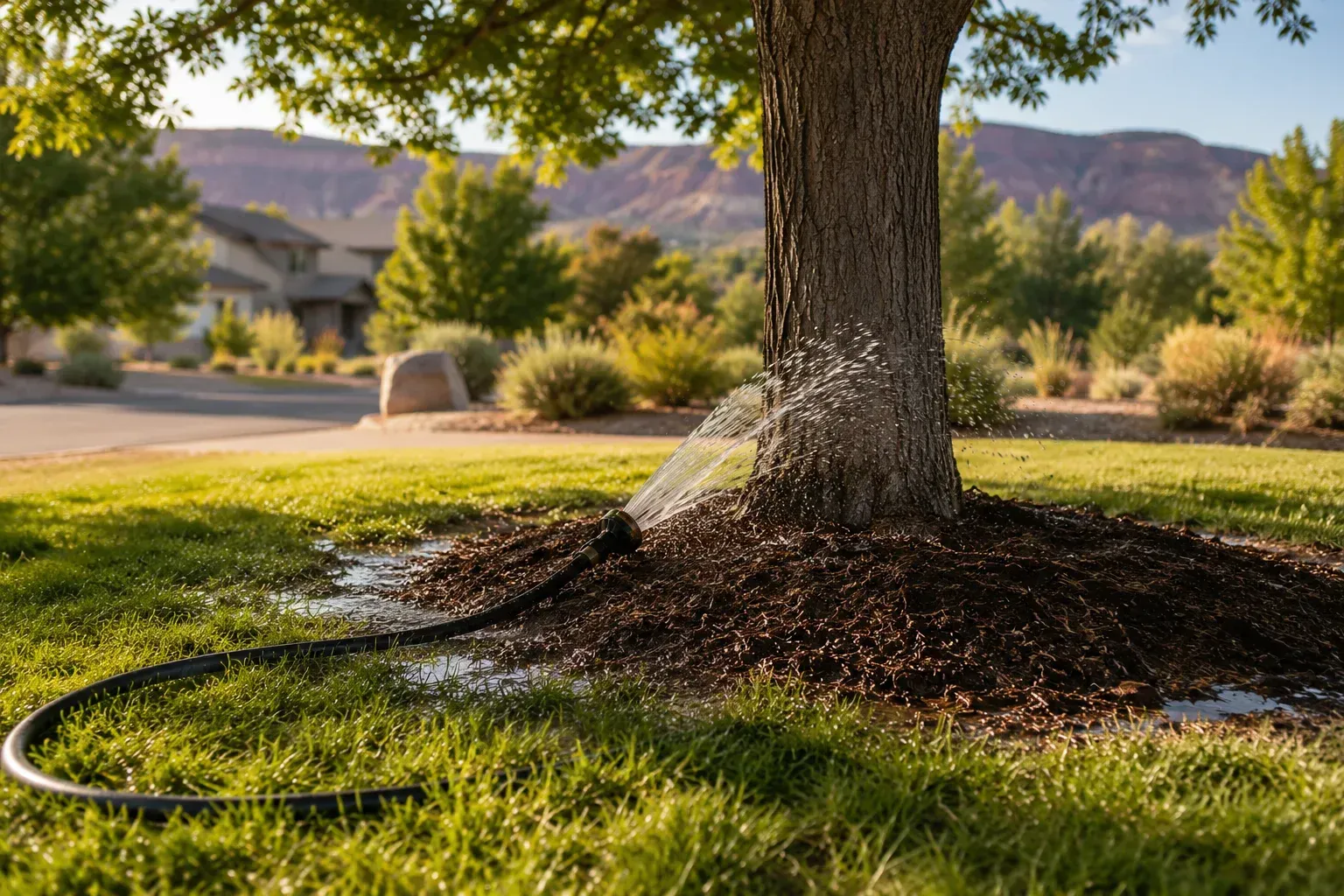
Table of Contents
- Introduction
- Why Summer Watering Matters So Much in Grand Junction
- How Much Water Does a Mature Tree Actually Need?
- What Changes the Number: Soil, Species, and Age
- How to Deep Water a Mature Tree the Right Way
- Simple Ways to Hold Moisture in the Soil
- Signs Your Tree Is Under Drought Stress
- Common Watering Mistakes to Avoid
- Conclusion
- Not Sure If Your Trees Are Getting Enough Water This Summer?
- Frequently Asked Questions
Key Takeaways
- A mature tree in Grand Junction generally needs about 10 gallons of water per inch of trunk diameter, applied every one to two weeks during the hottest part of summer.
- Deep, slow watering that soaks the soil 8 to 12 inches down does far more good than short, frequent sprinkler cycles.
- Water at the dripline, not against the trunk. That is where the absorbing roots actually live.
- The Grand Valley's clay-heavy, alkaline soil holds water well but absorbs it slowly, so runoff is a bigger problem here than in sandy areas.
- Wilting, scorched leaf edges, early fall color, and a thinning canopy are common signs a mature tree is not getting enough water.
Introduction
A mature tree in Grand Junction needs roughly 10 gallons of water per inch of trunk diameter each time you water, and during July and August that usually means watering every one to two weeks. So a shade tree with a 12-inch trunk is drinking around 120 gallons per session, which surprises a lot of homeowners the first time they do the math.
The Grand Valley sits in the high desert. We get somewhere around 9 inches of precipitation in a typical year, and most of it does not fall in summer. Lawns get irrigated, but a quick sprinkler cycle wets the top inch or two of soil and stops well short of where a mature tree's roots are working. That gap between what the lawn gets and what the tree needs is where most drought damage starts, and it is why preventive tree care in this valley starts with water before anything else.
This guide covers how much water mature trees need here, what changes that number, and how to water in a way that actually reaches the roots.
Why Summer Watering Matters So Much in Grand Junction
Grand Junction summers regularly push past 95 degrees, and stretches above 100 are normal in July. Add low humidity and steady wind coming off the desert, and trees lose moisture through their leaves faster than local rainfall can replace it.
Native trees along the river bottoms handle this because their roots reach groundwater. The trees in most yards do not have that option. Maples, ash, lindens, honey locusts, and fruit trees planted around town all came from wetter climates, and they depend on people for the difference.
A stressed tree does not always show damage right away, either. A dry summer can weaken a tree in ways that show up one or two years later as dieback, borer damage, or limbs that fail in a storm. Water is the cheapest problem to fix on that list.
How Much Water Does a Mature Tree Actually Need?
The working rule used by Colorado State University Extension is about 10 gallons per inch of trunk diameter, measured at knee height, per watering. A tree with an 8-inch trunk needs around 80 gallons. A big old cottonwood with a 24-inch trunk needs 240 or more.
How often depends on the month:
- May and June: every two to three weeks is usually enough.
- July and August: every one to two weeks during sustained heat.
- September: stretch back to every two to three weeks as nights cool.
These are starting points, not fixed rules. A tree on a south-facing slope in full sun dries out faster than the same species shaded by a house. The real test is the soil. Push a long screwdriver into the ground near the drip line a day after watering. If it slides in easily to 8 inches or more, the moisture went where it needed to go. If it stops short, the tree needs more water or a slower delivery.
What Changes the Number: Soil, Species, and Age
Grand Valley Soil
Most soil in the valley is clay-heavy and alkaline, with some areas carrying salt left over from old irrigation patterns. Clay holds moisture longer than sandy soil, which helps, but it absorbs water slowly. Pour water on too fast and it runs off toward the street instead of soaking down. Slow application matters more here than almost anywhere else in the state.
Properties near the Redlands or up toward the Book Cliffs can have shallower, rockier soil that drains fast and needs shorter, more frequent watering.
Tree Species
Species makes a real difference. Siberian elms and honey locusts tolerate dry spells reasonably well. Silver maples, aspens, birches, and most fruit trees do not, and they tend to show scorch first when water runs short. If you are not sure what species you have, that is worth finding out before you set a schedule.
Tree Age
Mature trees have wide root systems and stored energy, so they ride out short dry spells better than young trees. The tradeoff is scale. A large canopy moves an enormous amount of water on a hot day, so when a mature tree does run dry, the deficit is big and recovery is slow. Trees planted within the last three years are a different subject entirely and need water once or twice a week.
How to Deep Water a Mature Tree the Right Way
Deep watering means getting moisture 8 to 12 inches into the soil across the root zone. A few methods work well in local conditions:
Use a Soaker Hose at the Dripline
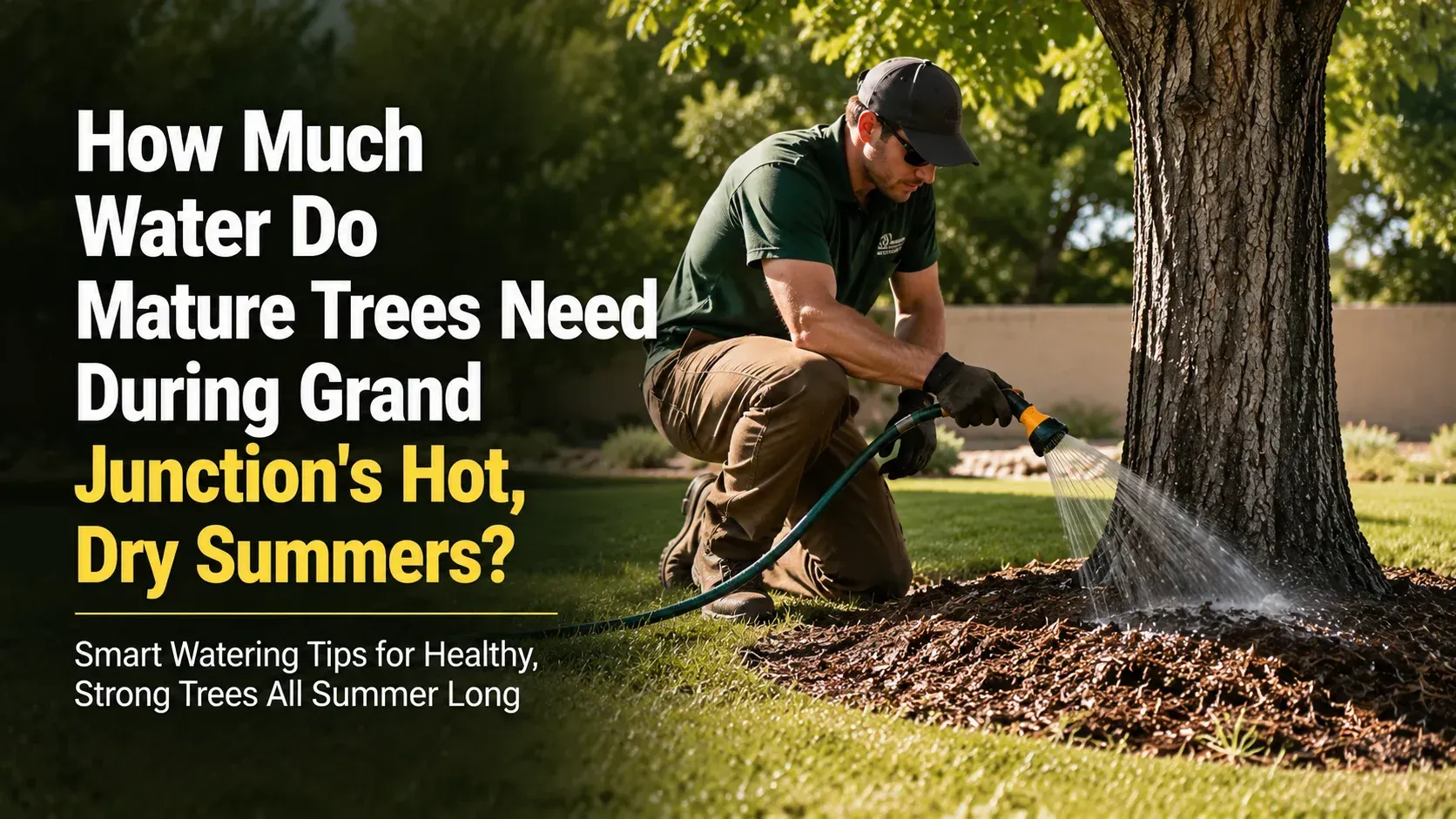
Coil a soaker hose in a ring under the outer edge of the canopy, the dripline, and let it run for two to four hours. The dripline is where fine absorbing roots concentrate. Watering against the trunk does little for the tree and can invite rot at the root flare.
Try the Slow Trickle Method
No soaker hose? Set a regular hose to a pencil-thin trickle at the dripline and move it to a new spot every 30 to 45 minutes, working around the tree. It takes patience, but it matches the slow absorption rate of clay soil almost perfectly.
Water in the Morning
Early morning watering loses the least to evaporation and gives the soil surface time to dry before nightfall. Evening is second best. Midday watering in July wastes a noticeable share of what comes out of the hose.
Do Not Rely on the Lawn Sprinklers
This one comes up constantly. Sprinkler systems are tuned for grass roots in the top few inches of soil. They keep a tree alive, sort of, but they also train roots to stay shallow, which makes the tree less stable and more drought-prone over time.
Simple Ways to Hold Moisture in the Soil
Watering is half the job. Keeping that water in the ground is the other half.
A 3 to 4 inch layer of wood chip mulch spread from near the trunk out to the dripline can cut surface evaporation dramatically. Keep the mulch pulled back a few inches from the bark itself. Volcano-style mulch piled against the trunk causes more problems than it solves.
It also helps to reduce competition under the canopy. Turf grass is thirsty and takes the first drink from every watering. A mulched bed under the tree instead of grass sends more of each gallon to the roots.
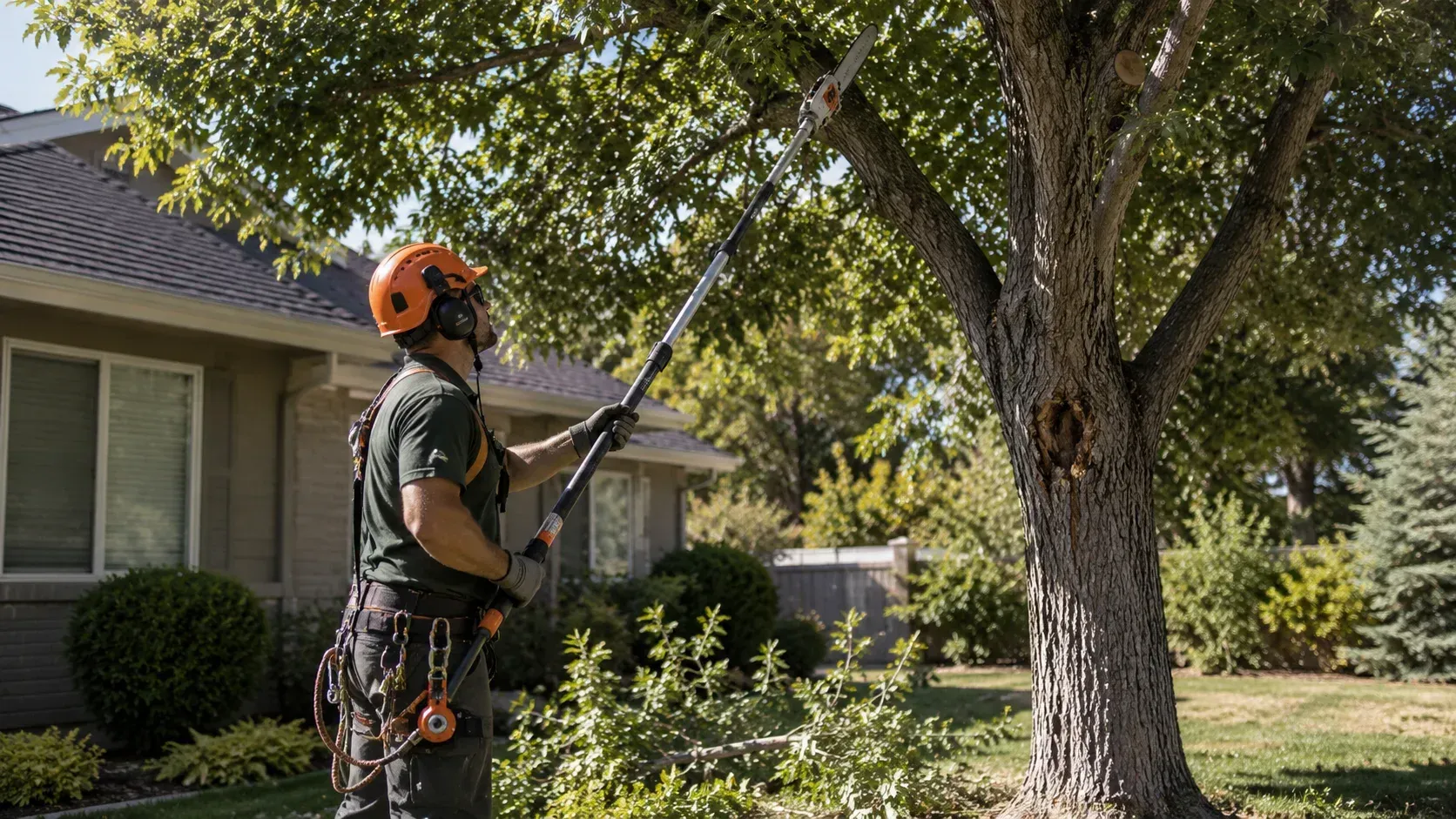
Finally, a healthy structure conserves the tree's own resources. Removing deadwood and thinning a crowded canopy through proper tree trimming reduces the load the root system has to support, though heavy pruning in the middle of a hot summer should be avoided since it can add stress of its own.
Signs Your Tree Is Under Drought Stress
Catching stress early gives you room to correct it. Watch for:
- Wilting or curling leaves that do not recover overnight.
- Scorched edges, where leaf margins turn brown and crispy while the center stays green.
- Early fall color or leaf drop in July or August.
- A thinning canopy where you can suddenly see more sky through the tree than last year.
- Cracked, hard soil pulling away from the root zone.
Some of these symptoms overlap with disease and insect problems, which is one reason periodic tree inspections are useful. Watering a tree that is actually fighting borers will not solve the real issue, and the reverse is true too.
Common Watering Mistakes to Avoid
A few habits cause most of the trouble we see in local yards. Frequent shallow watering builds shallow roots. Watering at the trunk misses the absorbing roots and keeps bark wet. Assuming a mature tree "takes care of itself" ignores the fact that most yard trees here are non-native species living far from the conditions they evolved for. And stopping water cold in September leaves trees entering winter dry, when an occasional deep soak during warm, dry fall and winter spells still matters in this climate.
Conclusion
Mature trees in Grand Junction generally need about 10 gallons per inch of trunk diameter, delivered slowly at the dripline every one to two weeks through the hottest months. Clay soil rewards patience: slow water in, mulch on top, sprinklers not counted as tree watering. Species, sun exposure, and soil depth all shift the numbers, so let a screwdriver test of your actual soil settle any doubt. A tree that gets real water through July and August carries that strength into storm season, winter, and the years after.
Not Sure If Your Trees Are Getting Enough Water This Summer?
If a tree on your property is dropping leaves early, thinning out, or just does not look right, a trained eye can usually tell whether the problem is water, pests, or something structural. Feel free to
contact us or call (970) 589-2268 with questions about a tree you are concerned about. There is no pressure and no obligation, just straight answers so you can decide what, if anything, your trees actually need.
Frequently Asked Questions
How many gallons of water does a mature tree need in Grand Junction?
A common guideline is 10 gallons per inch of trunk diameter per watering. A tree with a 15-inch trunk would need about 150 gallons, applied slowly so clay soil can absorb it.
How often should I water mature trees in summer?
During July and August heat, every one to two weeks is typical. In May, June, and September, every two to three weeks is usually enough. Check soil moisture with a screwdriver test rather than watering strictly by the calendar.
Is my lawn sprinkler system enough for my trees?
Usually not. Sprinklers wet the top few inches of soil, while mature tree roots need moisture 8 to 12 inches down. Trees near irrigated lawns still benefit from separate deep watering.
Where should I water: at the trunk or the edge of the canopy?
At the dripline, the outer edge of the canopy, and just beyond it. Fine absorbing roots concentrate there. Water applied against the trunk does little good and can keep the root flare too wet.
What are the first signs a tree is not getting enough water?
Curled or wilted leaves, brown scorched leaf edges, early fall color, and a canopy that looks thinner than the previous year are common early signs of drought stress.
Related Posts