Preventive Tree Care: What It Actually Prevents and When It Is Worth the Money
Table of Contents
- Introduction
- What Preventive Care Genuinely Prevents
- What It Does Not Prevent
- The First Question: Is This Tree Worth Investing In
- Why Emergency Work Costs More Than Planned Work
- A Realistic Maintenance Plan by Tree Age
- The Highest Return Thing You Can Do Costs Almost Nothing
- Mulch, Done Correctly
- When to Schedule the Assessment
- What a Professional Assessment Should Cover
- Local Problems Worth Knowing By Name
- What Not to Spend Money On
- Succession Planting: The Part Nobody Plans For
- Signs That Move a Tree to the Front of the Line
- Conclusion
- Book a Preventive Tree Care Assessment
- Frequently Asked Questions
Key Takeaways
- Preventive care reduces the odds of predictable failures. It does not make a tree storm proof, and any promise that it does is overselling.
- The first decision is not what care a tree needs, it is whether the tree is worth the investment. Some preventive spending belongs on removal and replanting instead.
- Emergency work costs more because of short notice mobilization, worse working conditions, no ability to plan the method, and damage that has already happened.
- The highest return window for pruning is on young trees. A codominant stem removed at five years is one cut. The same defect at forty years is a cabling project or a removal.
- Winter watering during dry spells is the single most valuable preventive action in the Grand Valley, and it costs almost nothing.
- Routine fertilizing, wound sealants, and preventive pesticide injections without a diagnosed problem are common places homeowners waste money.
- Planting the replacement tree ten to fifteen years before removing the old one is what long term planning actually looks like.
Introduction
Preventive tree care is worth the money when it targets predictable, progressive problems: structural defects that get more expensive to fix every year, deadwood over things you care about, and water stress that quietly weakens everything else. It is not worth much as insurance against storms, and the honest version of the pitch says so.
That distinction matters because the usual framing, that prevention always beats reaction, is too broad to act on. A homeowner with four trees needs to know which one to spend money on this year, what that money actually buys, and what happens if they wait. Those are answerable questions. "Be proactive" is not.
Conditions in Grand Junction, Clifton, Fruita, Redlands, and Montrose also change the priorities compared with wetter parts of the country. Long dry stretches, alkaline soils, intense UV at elevation, late spring freezes in orchard country, and a lot of fast growing weak wooded species planted decades ago all shift where the value is. Structural work through tree trimming is part of it, but the highest return item on the list turns out to be water.
This article covers what preventive care reliably delivers, what it cannot, how to decide which trees deserve the budget, and what to do at each stage of a tree's life.
What Preventive Care Genuinely Prevents
Be specific about the wins, because they are real.
Structural defects getting worse. This is the big one. A codominant stem, a crossing limb, an overextended leader. Every one of these is cheap to correct on a young tree and expensive or impossible to correct on a mature one. Time works against you here in a way it does not for most property maintenance.
Deadwood coming down on its own schedule. Dead limbs fall. Removing them is the most reliable risk reduction available, and it is straightforward work.
Small wounds become decay pockets. Torn limbs from a previous storm, mower damage at the base, and untreated splits all admit decay. Clean cuts and reduced physical damage keep the tree's own defenses working.
Water stress compounds into everything else. A drought stressed tree closes wounds slowly, resists pests poorly, and drops limbs more readily. Consistent water is upstream of a long list of other problems.
Failures you could have seen coming. A limb over a driveway with a visibly cracked union is a predictable event. Those are the ones prevention catches.
Expensive surprises becoming scheduled expenses. Even where the total cost is similar, planned work happens on your calendar and your budget rather than at 11pm with a limb on the roof.
What It Does Not Prevent
This is where most articles on the topic overpromise, and being straight about it is more useful.
Preventive care does not storm proof a tree. A microburst that puts down power poles will take healthy trees with it. Hail damages every tree in its path regardless of maintenance history. Preventive work shifts probability, it does not remove risk.
It does not change species. A cottonwood is a fast growing, weak wooded tree that sheds limbs. Excellent care makes it a better maintained cottonwood. Same for silver maple, Siberian elm, willow, and callery pear. If a tree's structure is a species characteristic rather than a defect, pruning manages it, it does not fix it.
It does not reverse decay. Internal decay does not heal. Care can slow decline and reduce load, but wood that is gone is gone.
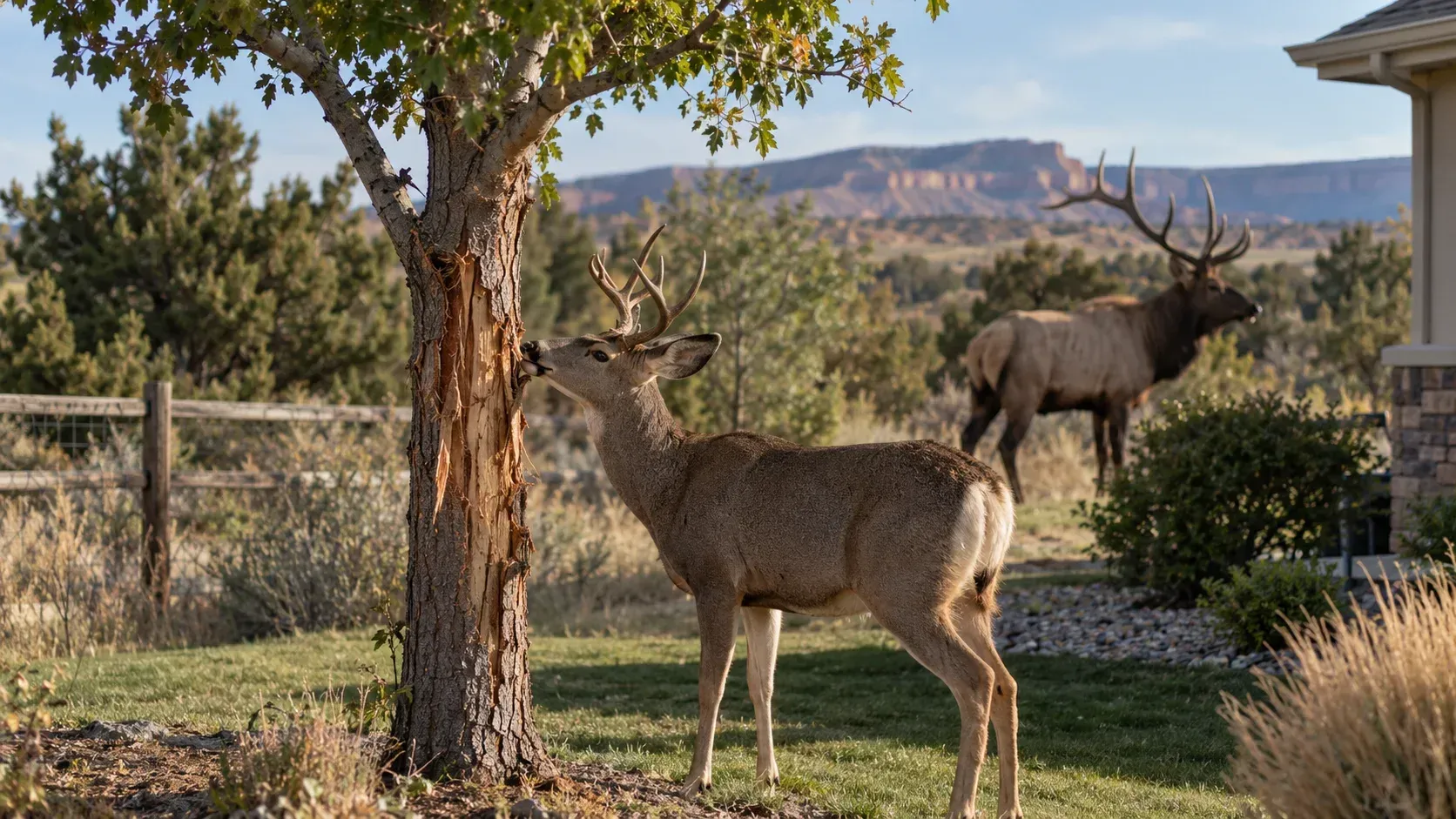
It does not prevent root damage from construction. Trenching, grading, and equipment traffic severe and compact roots. That damage often shows up in the canopy a year or more later, and no amount of prior pruning protects against it. Protecting the root zone before the work happens does.
It does not guarantee a tree survives a late freeze. In orchard country this is worth saying plainly. A well maintained tree recovers from a bad year more reliably, which is not the same as avoiding one.
The reason to name all this is that it makes the real value legible. Preventive care buys you fewer predictable failures, lower long term cost on structural work, and better information about which trees are actually a problem.
The First Question: Is This Tree Worth Investing In
Before deciding what a tree needs, decide whether it deserves the budget. This step gets skipped almost universally, and it is where the most money gets misallocated.
Trees clearly worth investing in:
- Mature, structurally sound shade trees positioned where they shade the house or a patio
- Trees that would take decades to replace and are in good condition
- Species suited to the site and the soil
- Trees with no significant defects and adequate space for their mature size
Trees where the money is better spent elsewhere:
- A large species planted within a few feet of a foundation, driveway, or service line, where no amount of pruning creates a permanent solution
- A volunteer Siberian elm or similar that seeded itself in a fence line and now has codominant stems and included bark
- A tree already in significant decline with decay at the base
- A tree whose defects require ongoing cabling inspection and repeated reduction to remain acceptable
For that second group, the genuinely preventive decision is often removal and replanting with something appropriate to the space. That is a harder conversation than a trimming quote, and it is usually the right one. Spending a few hundred dollars a year maintaining a tree that will need to come out within a decade is not prevention, it is deferral with interest.
Why Emergency Work Costs More Than Planned Work
The common claim is that emergency removal costs several times more than planned removal. Directionally that is right, and the reasons are worth understanding because they explain the whole argument for planning ahead.
Short notice mobilization. A crew is pulled off scheduled work, often outside normal hours, sometimes at night or on a weekend.
No ability to choose the method. Planned work lets the crew pick the approach that fits the site and bring the right equipment. Emergency work takes the situation as it is, which frequently means a more labor intensive approach or equipment brought in urgently.
Worse conditions. Wind, rain, snow, saturated ground, poor light, and unstable material.
Higher risk. A partly failed tree holds stored tension and behaves unpredictably. That is slower, more careful, more skilled work.
Demand spikes. After a regional storm, every crew in the area is booked. Prices and wait times both move.
The damage is already done. The removal is often the smaller line item next to the roof, fence, vehicle, or hardscape repair, and the insurance process that follows.
The practical takeaway is not that planned work is always cheaper in absolute terms. It is that the same tree costs less to deal with on a Tuesday in February than at midnight in July, and that most of the expensive part of an emergency is the damage rather than the tree work.
A Realistic Maintenance Plan by Tree Age
Not every tree needs attention every year. Matching effort to the life stage is what separates a plan from a subscription.
Newly planted, first three years. Water is the entire job. Remove nursery tags, wire, and stakes on schedule, generally within about a year, since ties left on girdle the trunk and prevent the tree from developing strength through movement. Mulch correctly. Do almost no pruning beyond removing broken or clearly competing growth.
Young, roughly three to fifteen years. This is the highest return window in the tree's entire life, and it is the one people skip. Structural pruning every three to five years establishes a single dominant leader, removes competing codominant stems, and sets good branch spacing. Each of these is one small cut now and a major intervention later. If you spend money on one thing, spend it here.
Mature, roughly fifteen to fifty years. Inspection every one to three years. Remove deadwood, reduce weight on overextended limbs, maintain clearance from structures and lines. Most healthy mature trees need less pruning than they get, and taking too much is a real risk at this stage.
Over-mature and declining. The work shifts from improvement to risk management. Assessment becomes the main service, corrective pruning becomes conservative, and the conversation turns toward how long the tree has and what replaces it.
The pattern worth noticing: heavy investment early, light touch in the middle, assessment focused at the end. The opposite of what usually happens.
The Highest Return Thing You Can Do Costs Almost Nothing
If preventive tree care in this region had one answer, it would be water, and specifically water in winter.
Trees in the Grand Valley face long dry stretches, and the winter problem is the one homeowners miss. Irrigation systems get blown out in October. Snowfall here is often light and does not deliver meaningful soil moisture. Meanwhile the ground frequently stays unfrozen, roots keep functioning, and evergreens keep losing moisture through their foliage all winter. Trees go into spring already depleted.
The consequences show up as things people blame on other causes: thin canopies, early leaf drop, dieback at branch tips, poor recovery from any other stress, and increased susceptibility to borers and canker.
Supplemental watering during dry winter spells, done when air temperatures are above freezing and the soil is not frozen, and applied slowly enough to soak in rather than run off, addresses a large share of that. It is the cheapest preventive measure available and the one with the widest downstream effect. How much mature trees actually need and how to deliver it is worth getting right, because most homeowners substantially underestimate both the volume and the area it needs to cover.
Two corrections to common practice. Lawn irrigation is not tree irrigation, since turf watering is shallow and frequent while trees need deep and infrequent. And watering at the trunk does very little, because the absorbing roots are spread out well beyond the canopy edge.
Mulch, Done Correctly
Cheap, effective, and routinely done in a way that harms the tree.
What works: an even layer of coarse organic mulch, roughly two to four inches deep, spread as far out toward the drip line as you can manage, with a clear gap of several inches around the trunk so no mulch touches the bark.
What harms: mulch mounded against the trunk in a cone. This holds moisture against bark that is not adapted to constant wetness, encourages decay at the root collar, and invites roots to grow up into the mulch and circle the trunk.
What good mulch does is real: moderates soil temperature, retains moisture through dry stretches, suppresses turf competition at the root zone, and keeps mowers and string trimmers away from the trunk. That last one matters more than it sounds, since repeated bark damage at the base is a common source of decay in the most structurally critical part of the tree.
When to Schedule the Assessment
Spring is a reasonable time to look at trees. It is not the optimal time for the structural part of the work, and the difference is worth understanding.
Late winter is better for structural assessment and corrective pruning. With the canopy bare, every union, crack, cavity, and deadwood pocket is visible from the ground. The same inspection with leaves on misses a meaningful portion of it. Dormant season pruning also lets the tree respond with its strongest growth period immediately afterward, and it puts the work ahead of wet spring snow, which is the load event most likely to break limbs here.
Spring has its own purpose, and it is a different one. Once trees leaf out, you can see what did not: sections that fail to leaf out, thin canopies, dieback at the tips, and winter injury on trunks. That information is not available in February.
The sensible pattern for a property with significant trees is a structural look in late winter and a health check once things leaf out. The reasoning behind the timing of storm season inspections goes into more depth on why the dormant window carries more value than the conventional spring recommendation.
What a Professional Assessment Should Cover
A useful assessment produces a priority list, not an inventory of imperfections. It should address:
- Root collar and base. Whether the trunk flare is visible or buried, whether girdling roots are present, whether there is decay, mushrooms, or physical damage at ground level.
- Trunk. Cracks, cavities, seams, loose bark, and previous wounds.
- Unions. Whether major forks show strong outward bark ridges or pinched included bark.
- Canopy. Deadwood, dieback, density compared side to side, hangers left from previous storms, and overextended limbs.
- Clearance. Structures, roof, service drop, sidewalk, neighbors.
- Site conditions. Soil, drainage, irrigation, recent construction, grade changes, compaction.
- Pest and disease presence, identified specifically rather than generally.
- A prioritized recommendation that says what to do now, what to watch, and what can wait, with reasoning.
That last item is the deliverable. If an assessment comes back as a list of everything that could be done, ask which three things matter and why.
Local Problems Worth Knowing By Name
Generic pest lists are not useful. A few things that genuinely turn up in this region:
Iron chlorosis. Extremely common in Grand Valley soils and constantly misdiagnosed. Leaves turn yellow while the veins stay green, usually worst on new growth. The cause is high soil pH locking up iron rather than a lack of iron in the soil, which is why adding fertilizer often does nothing. Maples, aspen, and several fruit trees are frequent sufferers. Treatment depends on correctly identifying it first.
Cytospora canker. Widespread in Colorado on spruce, aspen, cottonwood, willow, and peach. Shows as sunken, discolored bark areas often with resin, and branch dieback that progresses. Stress, especially drought stress, is a major predisposing factor, which is another argument for the watering point above.
Bark beetles and borers. Various species attack stressed trees. Healthy, adequately watered trees resist them far better, and a beetle problem is frequently a symptom of an underlying stress problem.
Fireblight. Relevant in orchard country, affecting pears, apples, and related ornamentals. Shoots blacken and curls in a characteristic way. Pruning timing and tool sanitation matter with this one.
Sunscald and southwest winter injury. Intense winter sun on the southwest side of thin barked trunks causes cracking and dead patches. Young trees and recently transplanted trees are most at risk.
Emerald ash borer has been present in Colorado and is a genuine long term concern for ash owners, though its confirmed range has been concentrated on the Front Range and quarantine status changes over time. If you have significant ash trees, it is worth checking current Colorado Department of Agriculture guidance rather than relying on any article's snapshot, since treatment decisions depend on how close the nearest confirmed infestation is.
What Not to Spend Money On
Preventive care has its own upsells, and recognizing them protects the budget for the things that work.
Routine fertilization on established trees with no diagnosed deficiency. Mature trees in a landscape setting are rarely nitrogen limited, and pushing growth on a structurally compromised tree adds weight and produces weaker wood. If a soil test or a clear symptom points to a specific deficiency, that is different.
Wound sealants and pruning paint. Research does not support them. Trees compartmentalize damage internally, and sealant can trap moisture against the cut.
Preventive pesticide injections with no identified pest. Injections wound the tree and cost real money. They make sense against a specific, present, identified threat, not as insurance.
Topping, marketed as size reduction or storm prep. It produces weakly attached sprout growth and leaves the tree taller, denser, and less safe within a few years.
Interior thinning is sold as letting wind pass through. Stripping out interior growth concentrates weight at the ends of long limbs, increases the leverage on their attachments, and exposes shaded bark to sun. It makes failure more likely, not less.
Filling cavities with concrete or foam. Adds weight, traps moisture, abrades the interior as the tree flexes, and hides the very thing that should be inspected.
Annual pruning on a mature tree that does not need it. Some healthy mature trees need nothing for several years. A plan that includes doing nothing for a season is a credible plan.
Succession Planting: The Part Nobody Plans For
If preventive care is genuinely an investment framing, this is the part that makes it one.
A mature shade tree took thirty or forty years to become what it is. When it comes out, whether by decline, storm, or decision, the replacement starts at nursery size and the shade is gone for well over a decade.
The move is to plant the successor before you need it. Choose a spot that will work when the old tree is gone, put a well suited species in the ground ten to fifteen years ahead, and let it establish in the meantime. When the old tree finally comes out, you are not starting from zero.
This is also the point to correct the original planting mistakes that created your current problems. Right species for the soil and the mature size available, planted at the correct depth with the root flare visible, far enough from structures and lines that it never becomes a clearance problem.
For anyone with a large aging cottonwood, elm, or silver maple near the house, this is the single most useful long term decision available, and it costs the price of a tree.
Signs That Move a Tree to the Front of the Line
Any of these means the tree gets looked at ahead of whatever else was scheduled:
- Mushrooms, conks, or shelf fungi at the base or on the trunk
- A crack or seam that opens visibly in wind
- A new lean, or an existing lean that has increased
- Soil cracking, mounding, or lifting on one side of the base
- A limb hanging in the canopy from a previous storm
- Increasing deadwood compared with last year
- A section of the canopy that failed to leaf out
- Bark falling away in patches
- Any of the above on a tree over a house, driveway, or area people use
Two or more together raises the urgency considerably. There are recognizable signs that a tree is dying or already dead that are worth learning to distinguish from ordinary seasonal changes, since the response is very different.
Conclusion
Preventive tree care earns its cost when it targets what is predictable: structural defects that get more expensive every year they are left, deadwood over things that matter, and water stress that makes every other problem worse. It does not make trees storm proof, and the version of the pitch that says otherwise is not doing anyone a favor.
The most useful reordering for most properties is this. Decide which trees are actually worth investing in before deciding what they need. Spend the pruning budget on young trees, where a single cut prevents a future cabling job. Water deeply, including through dry winters, because that one habit sits upstream of most other tree problems in this climate. Mulch properly and keep equipment away from trunks. Get a structural look in late winter when defects are visible, and a health check after leaf out.
And if you have an aging large tree near the house, plant its replacement now rather than in the year you lose it.
Book a Preventive Tree Care Assessment
If you want a clear picture of which trees on your property need work, which can wait, and which are worth investing in at all, an on site assessment will produce a prioritized list rather than a quote for everything at once. Late winter is the ideal window for the structural portion, and the health check works best once trees have leafed out. You can schedule an assessment for your property, call (970) 589-2268, or email joshua@treeclimbersservices.com.
Frequently Asked Questions
Is preventive tree trimming worth the money?
On young trees, yes, clearly. One small cut prevents a defect that costs far more to address at maturity. On healthy mature trees the return is narrower, and deadwood removal plus weight reduction on overextended limbs is usually where the value is.
How often should trees be professionally inspected?
Every one to three years for mature trees near structures, and after any major wind, hail, or heavy snow event. Young trees benefit from structural pruning every three to five years. Healthy trees away from targets can go longer.
When is the best time for tree care in Colorado?
Late winter for structural assessment and pruning, since bare canopies reveal defects and it precedes wet spring snow. A follow up after leaf out catches winter injury and dieback. Dead or hazardous limbs come out whenever found.
Do trees increase property value?
Mature, healthy, well placed trees are generally viewed as adding value, though published estimates vary widely by species, condition, and location. Hazardous or poorly placed trees can work against a sale, appearing as deferred maintenance.
What is the cheapest way to keep trees healthy?
Water them properly, including deep watering during dry winter spells when the ground is not frozen. Add correct mulching and keep mowers off the trunk. Those three habits cost very little and prevent a large share of tree problems in this climate.
Related Posts